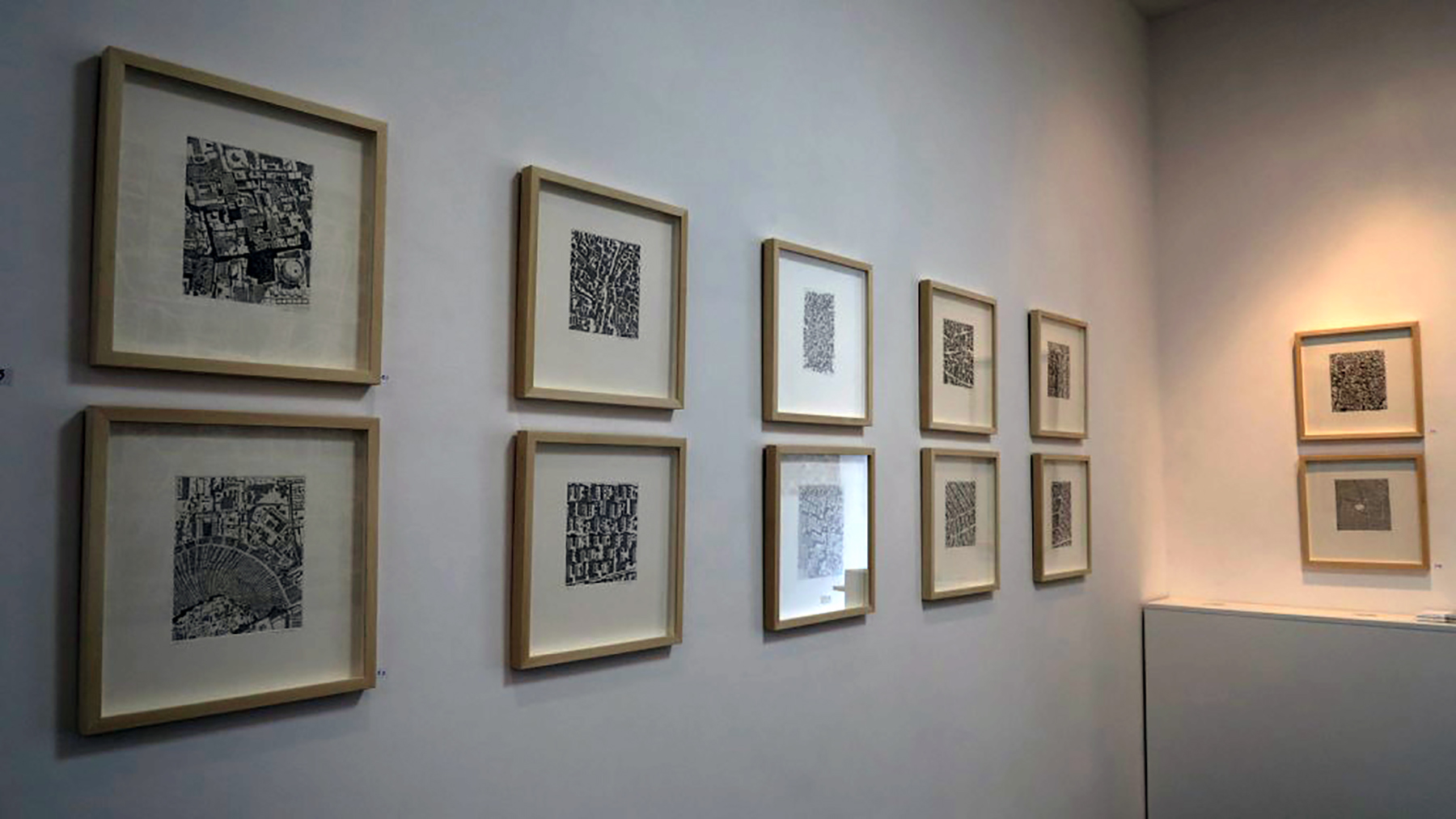
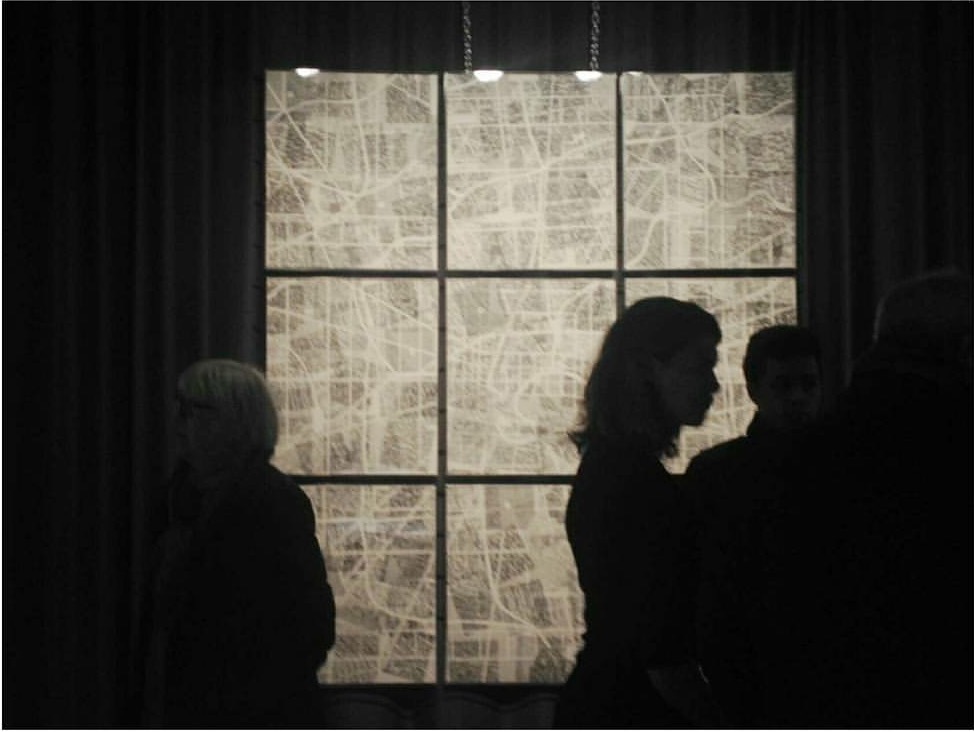
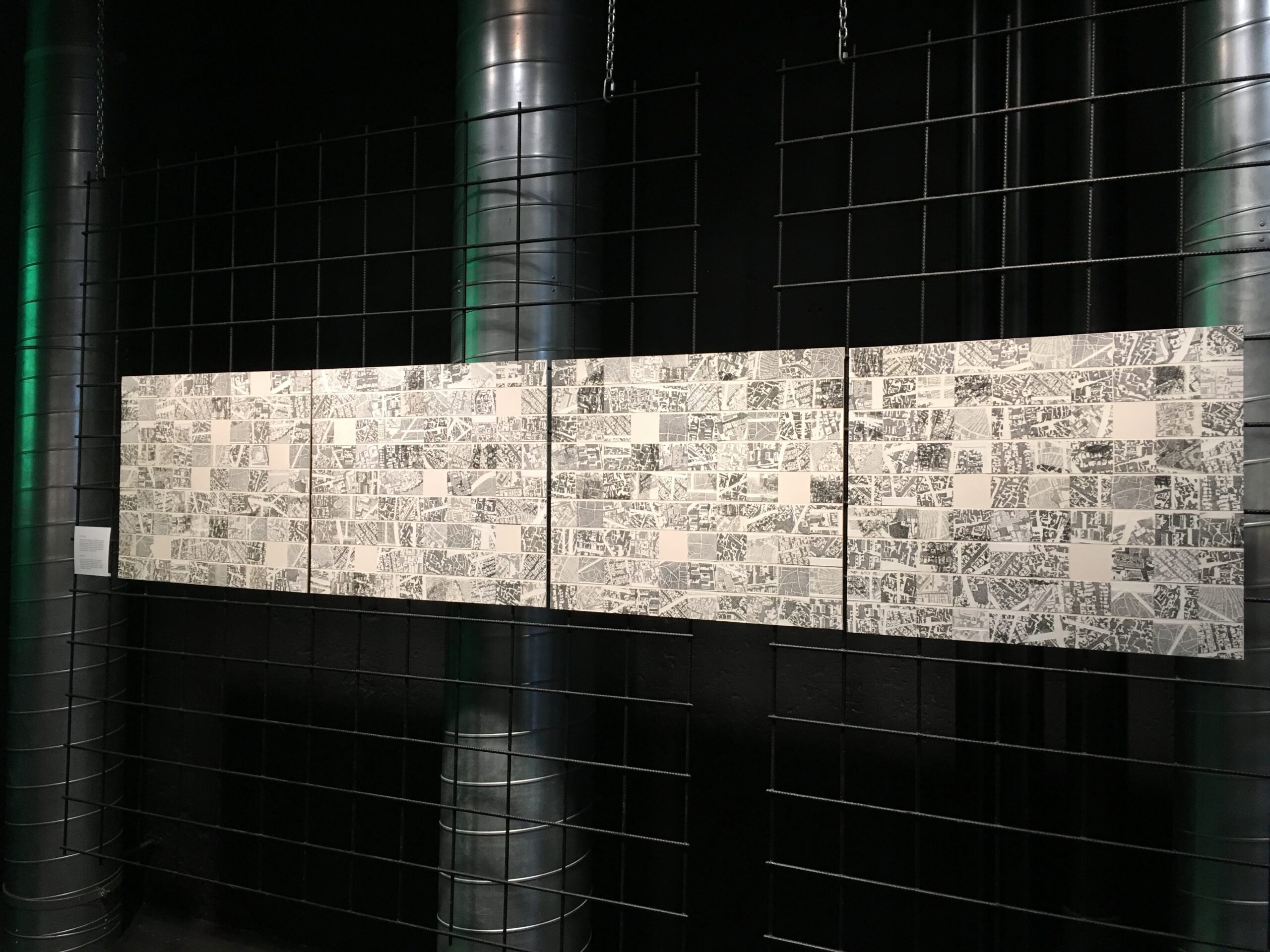
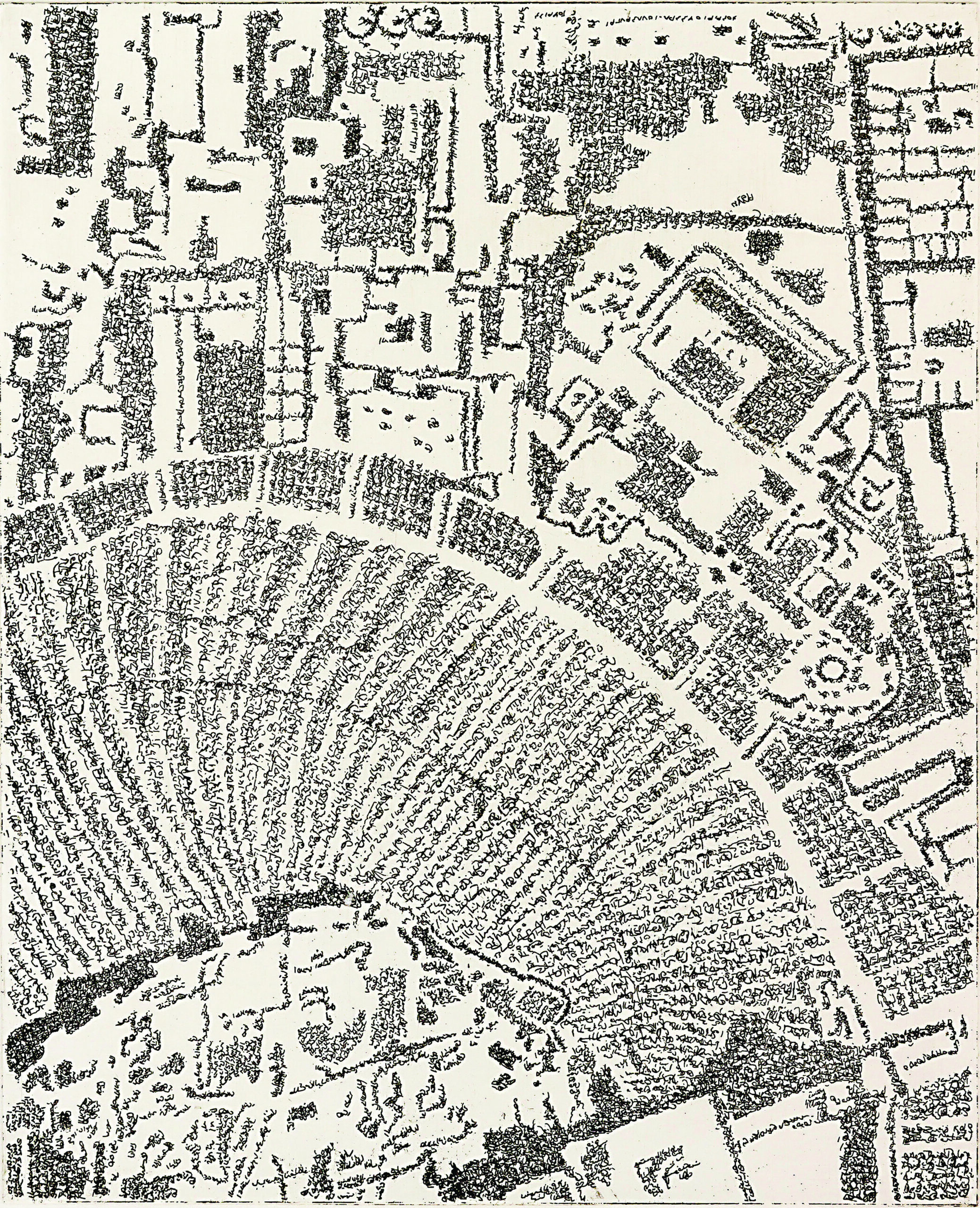
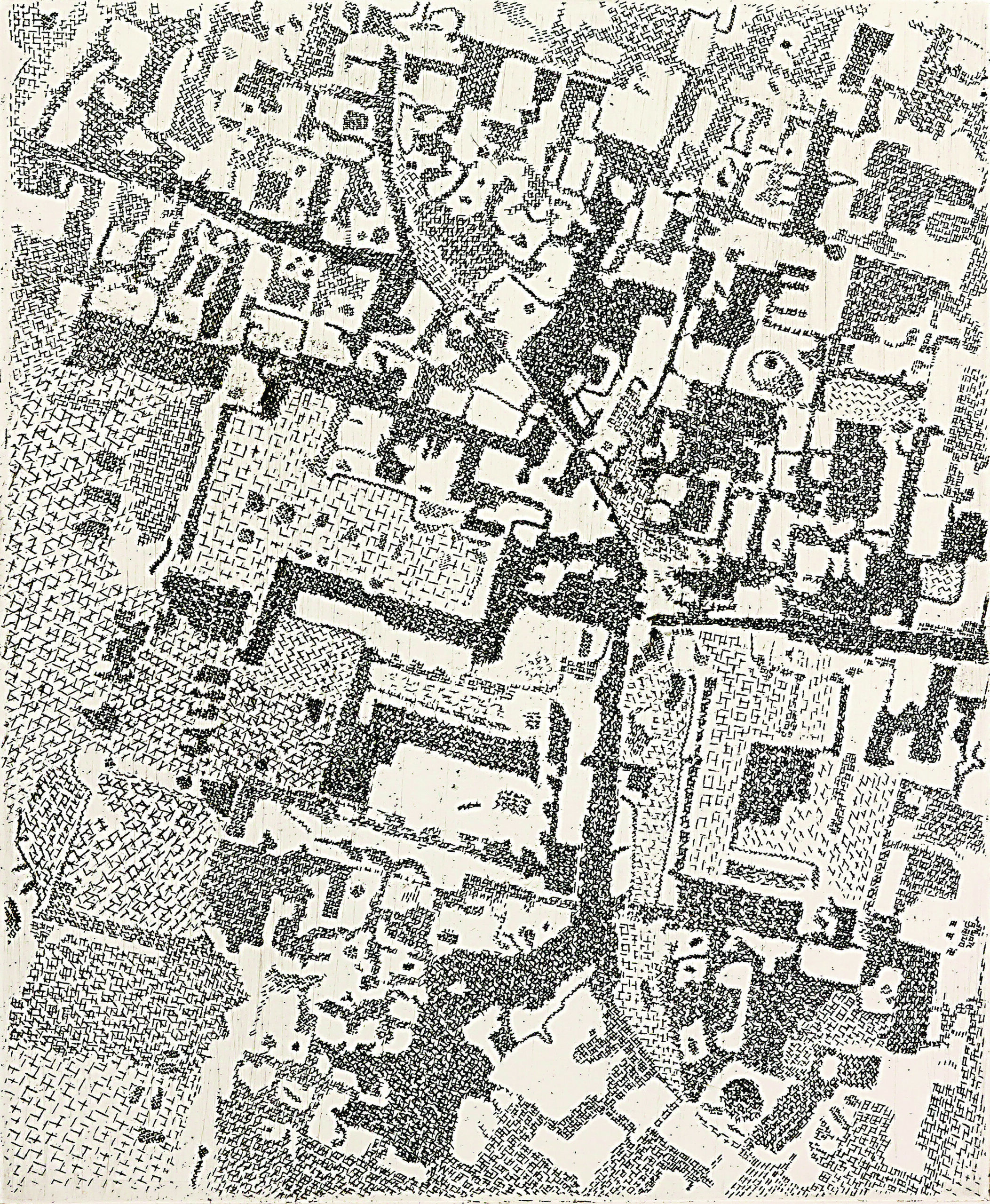
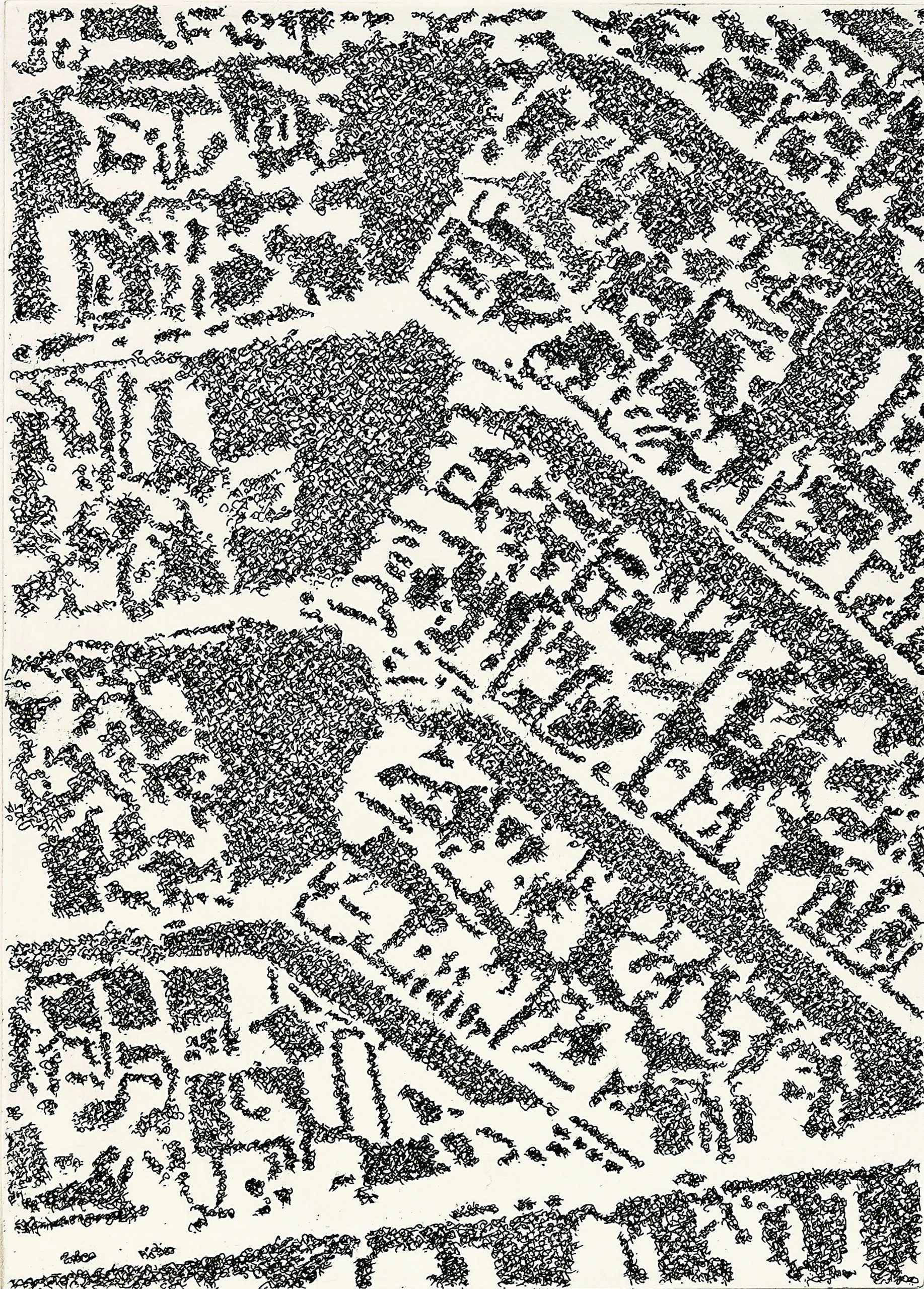
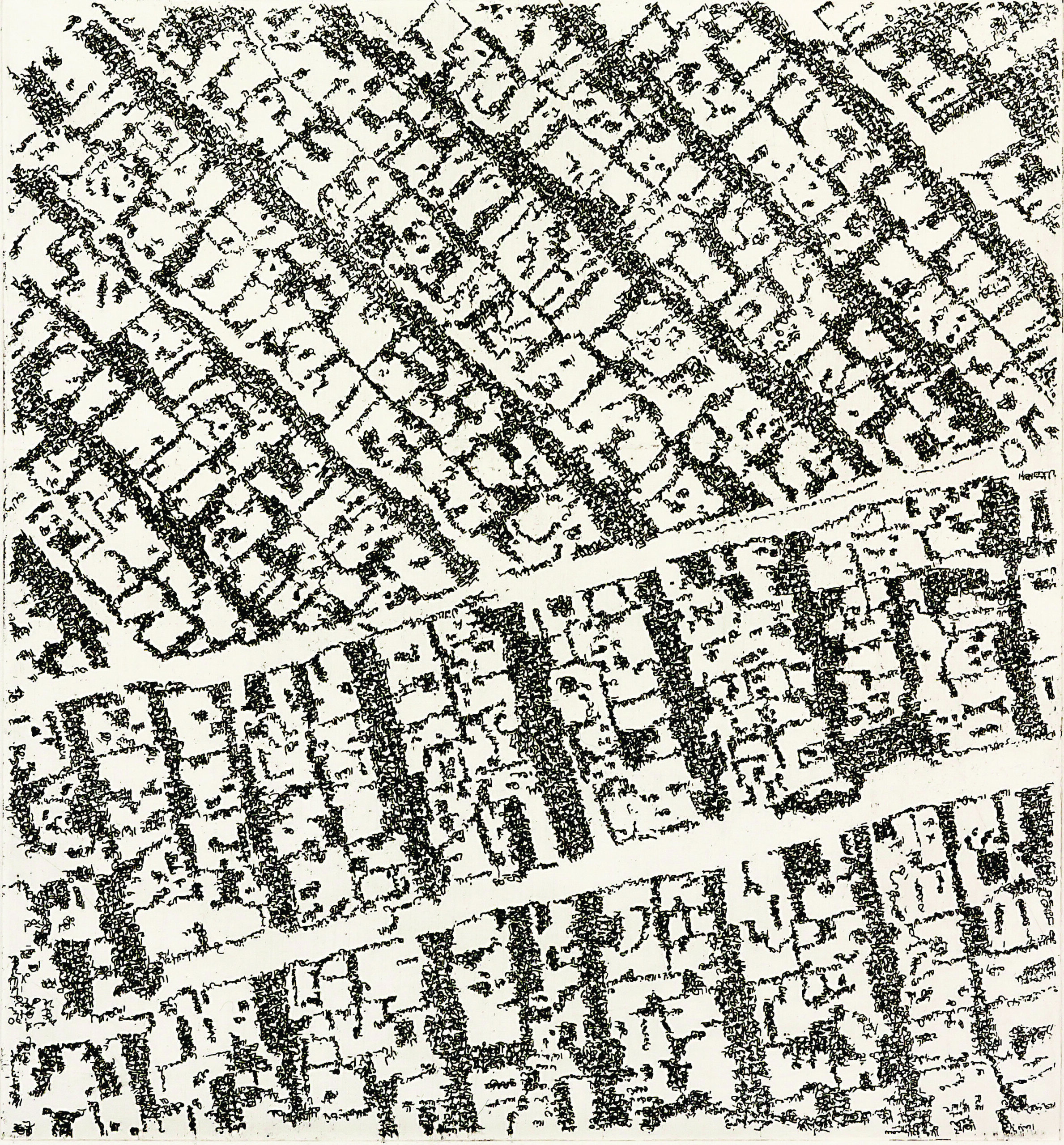
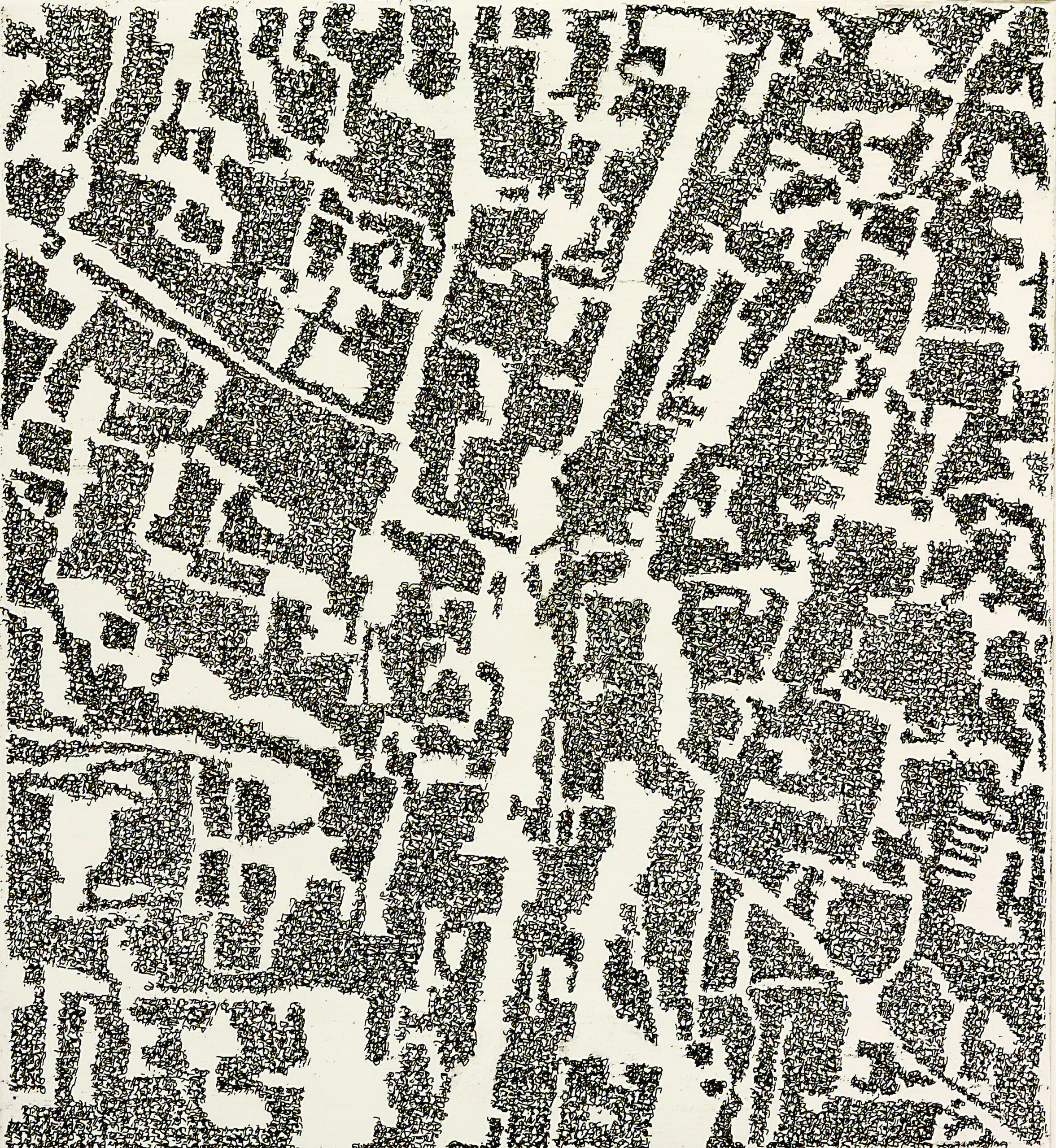
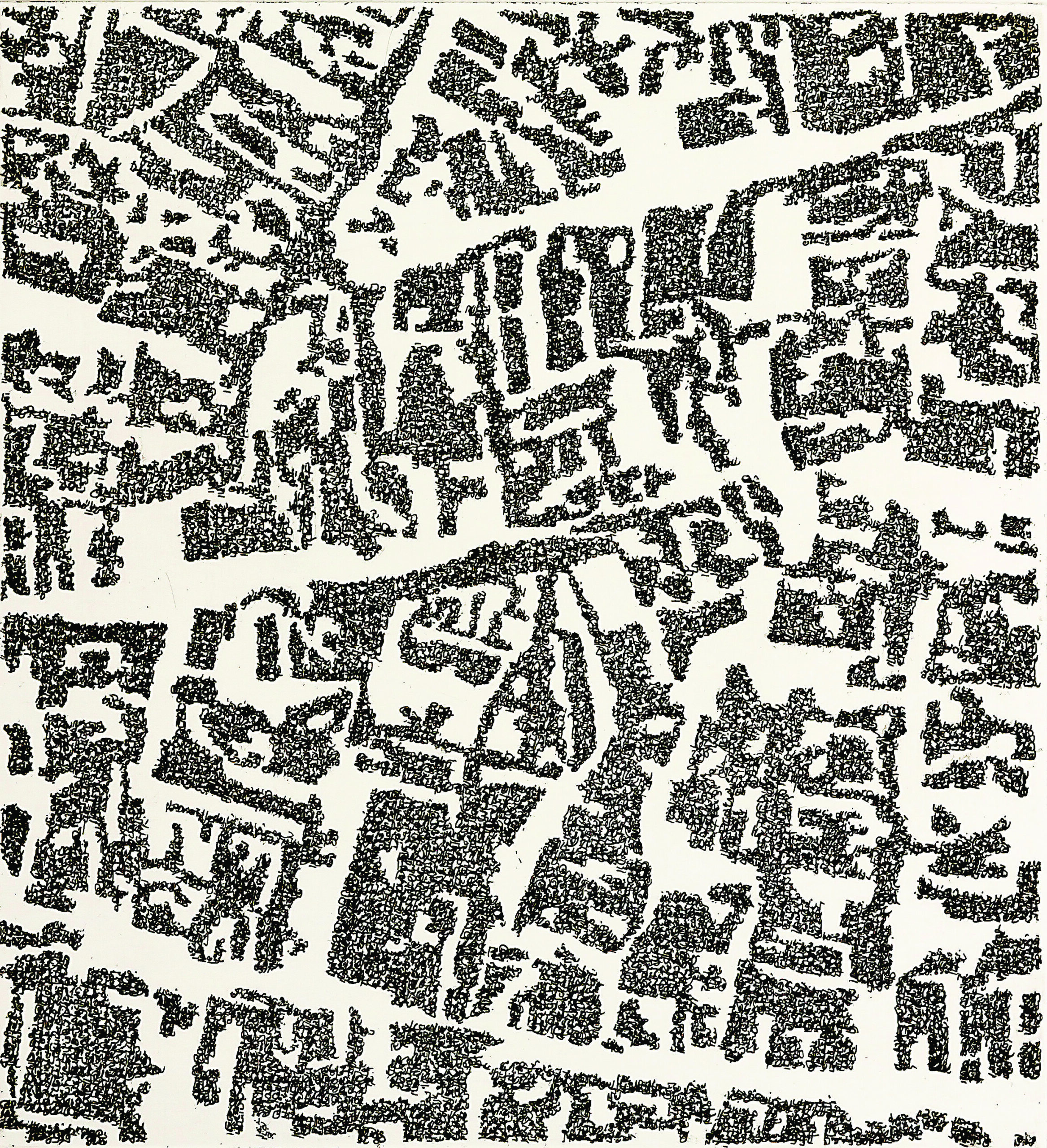
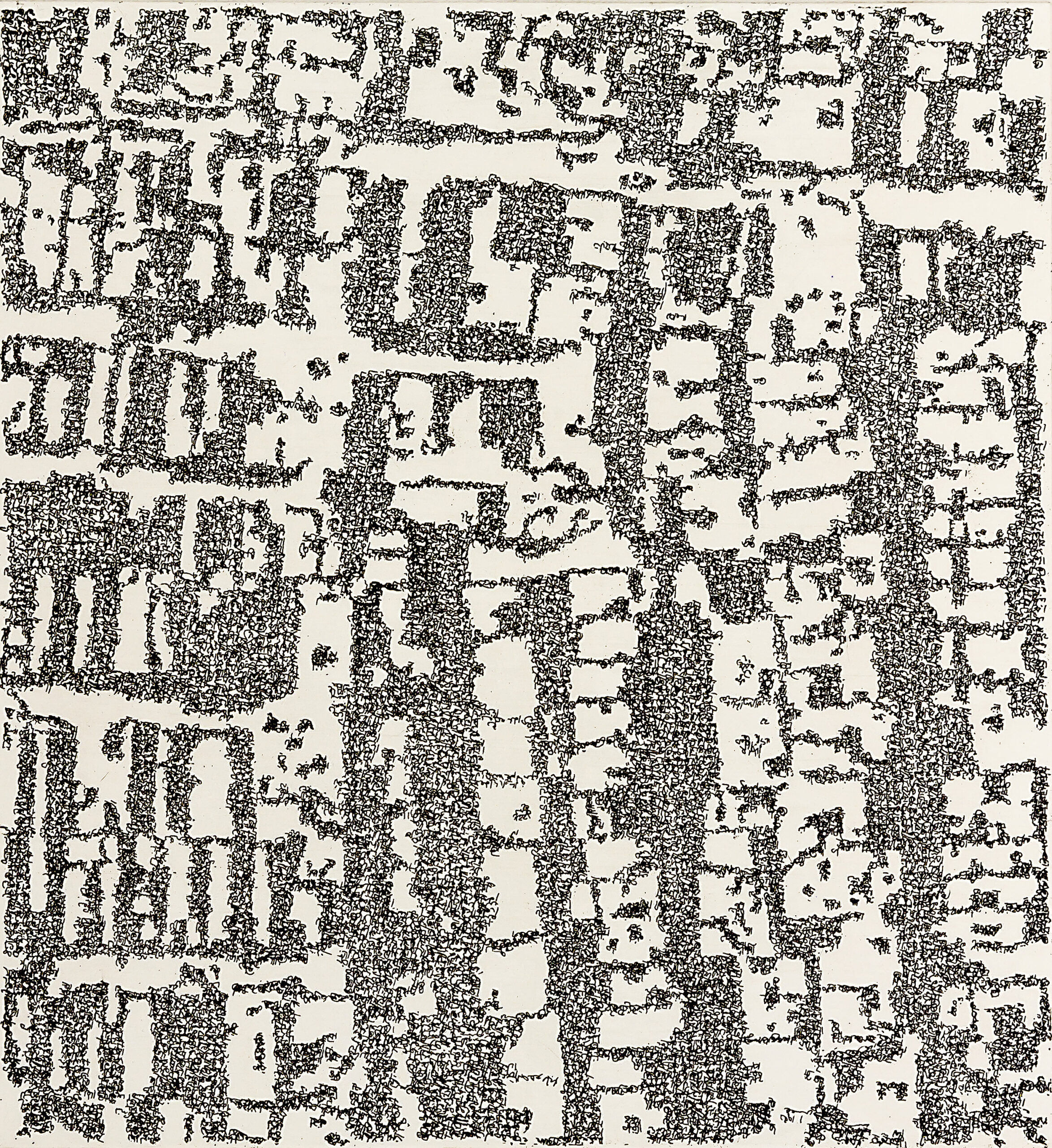
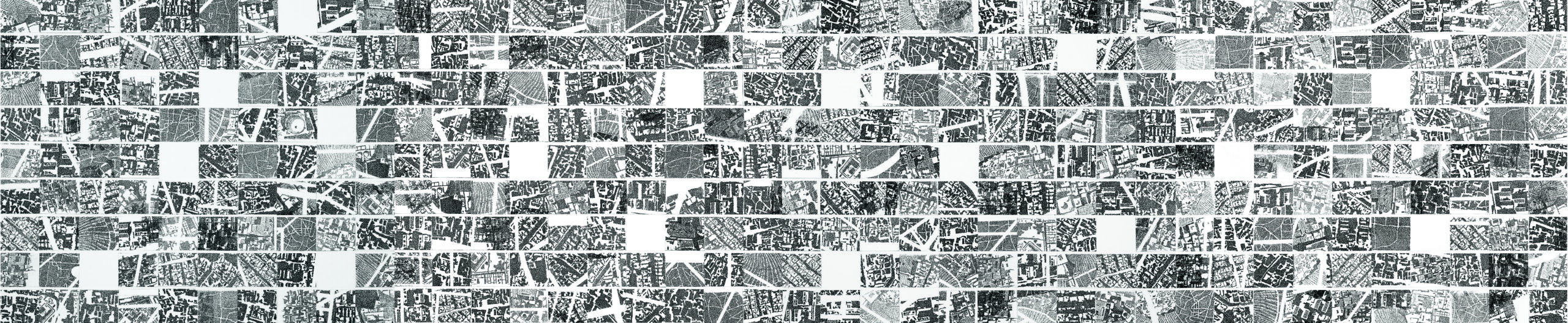
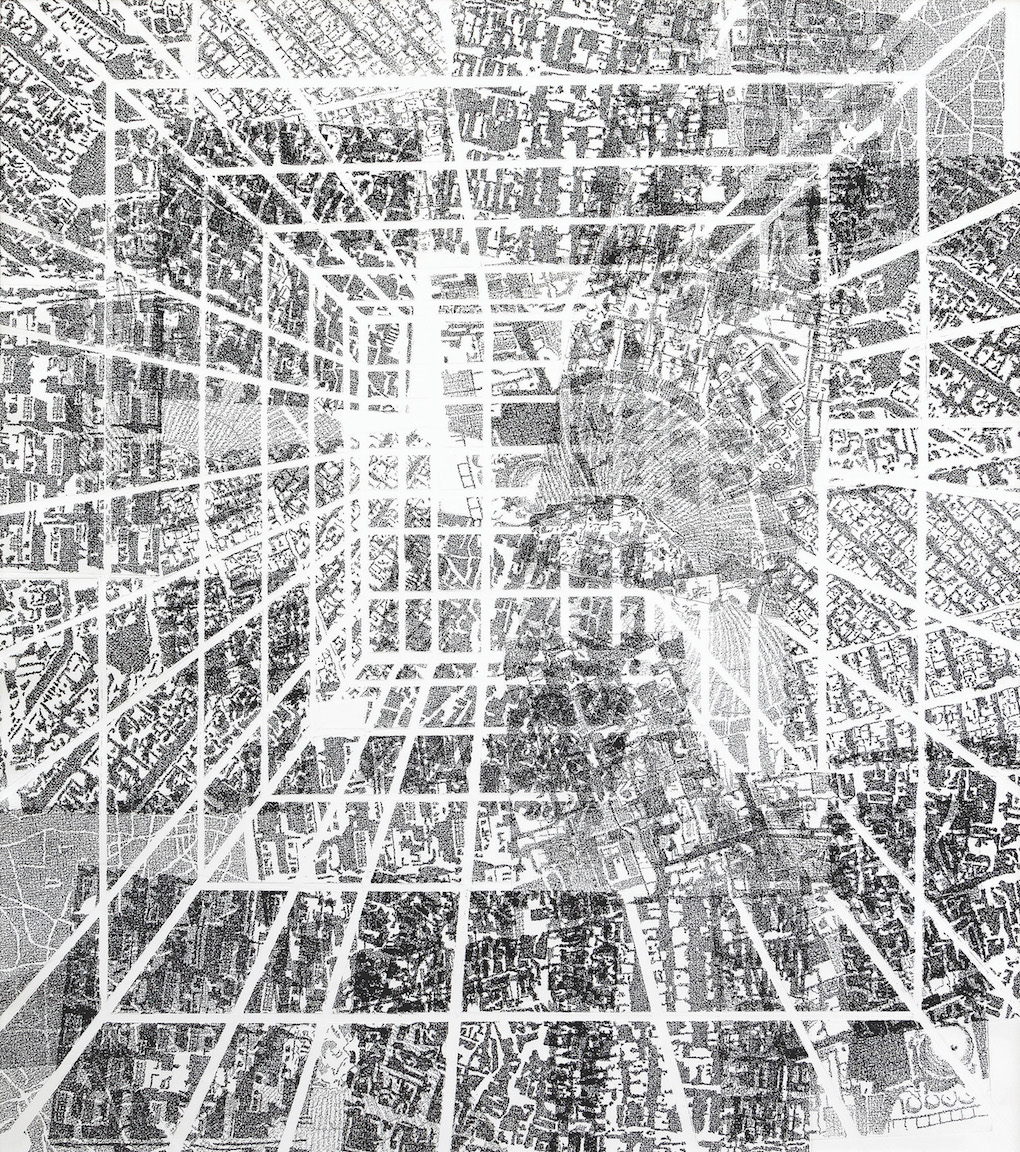
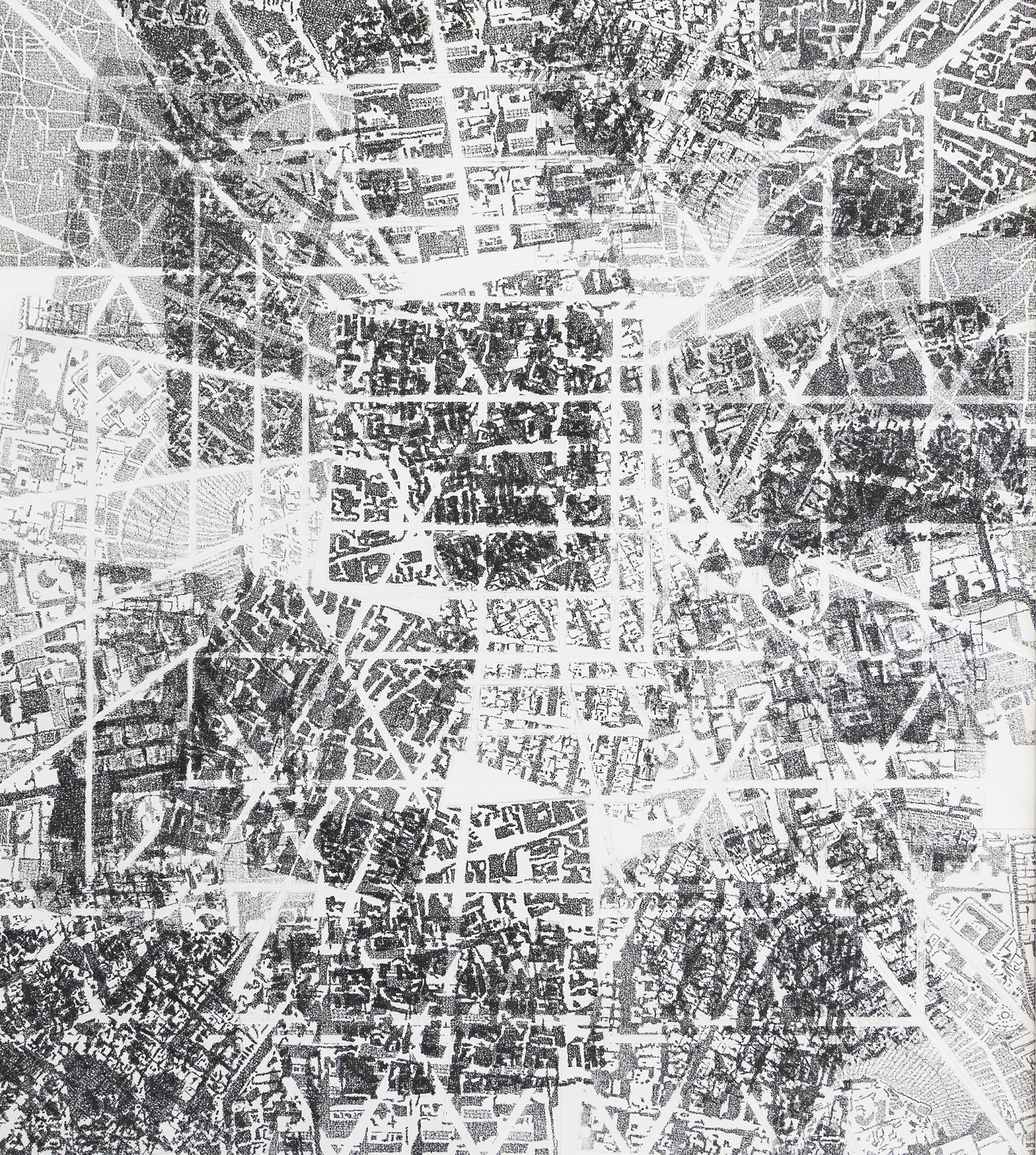
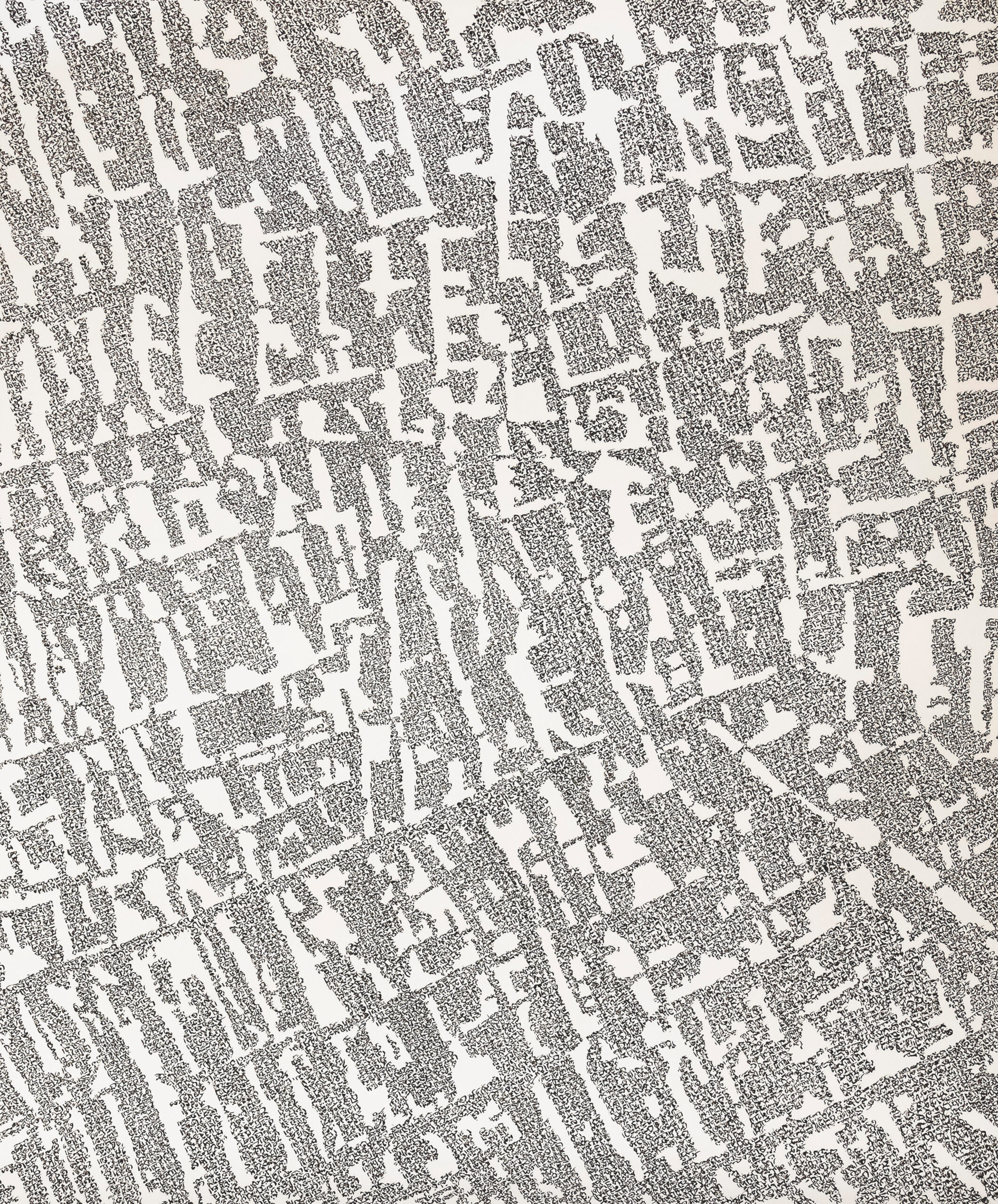
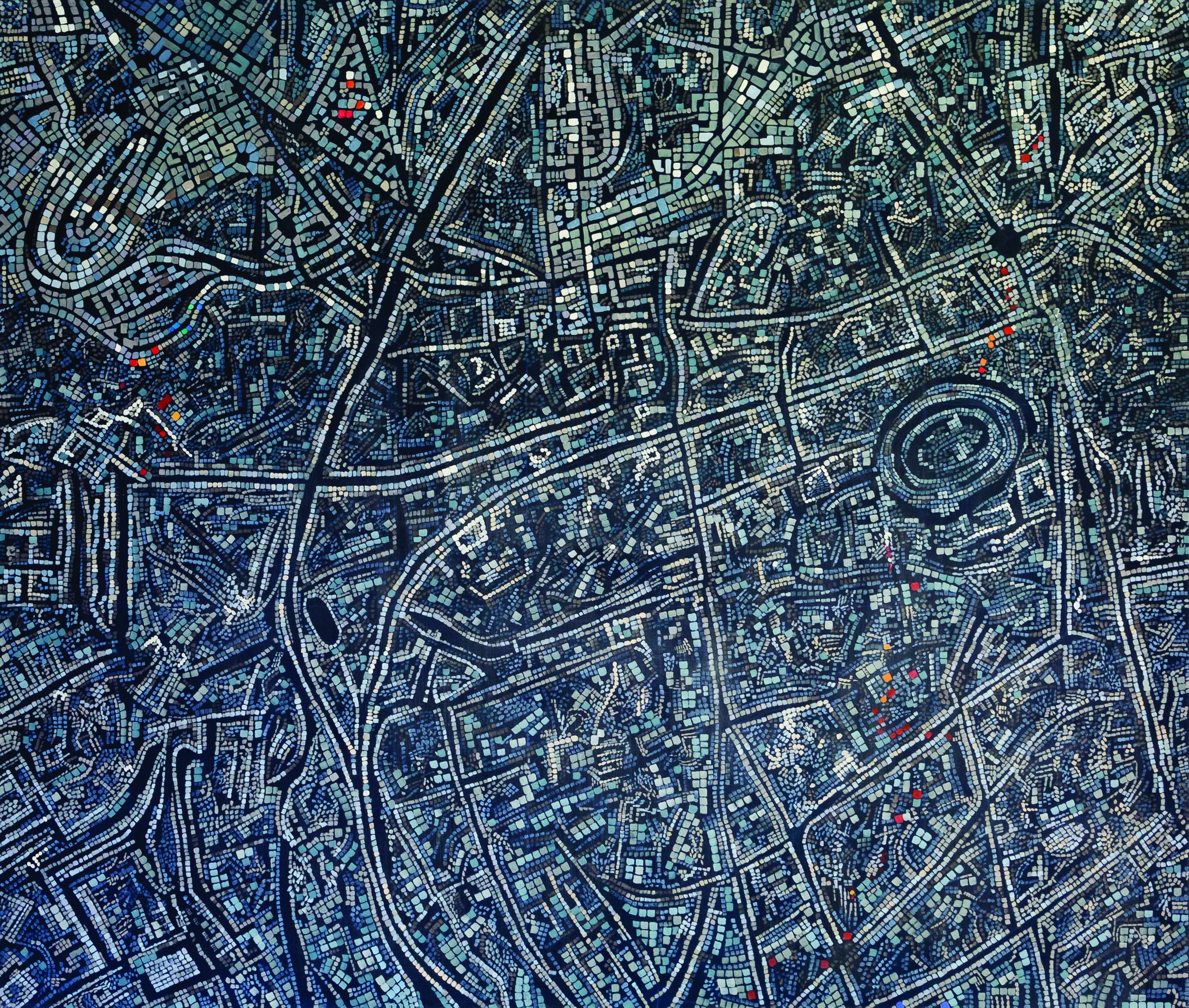
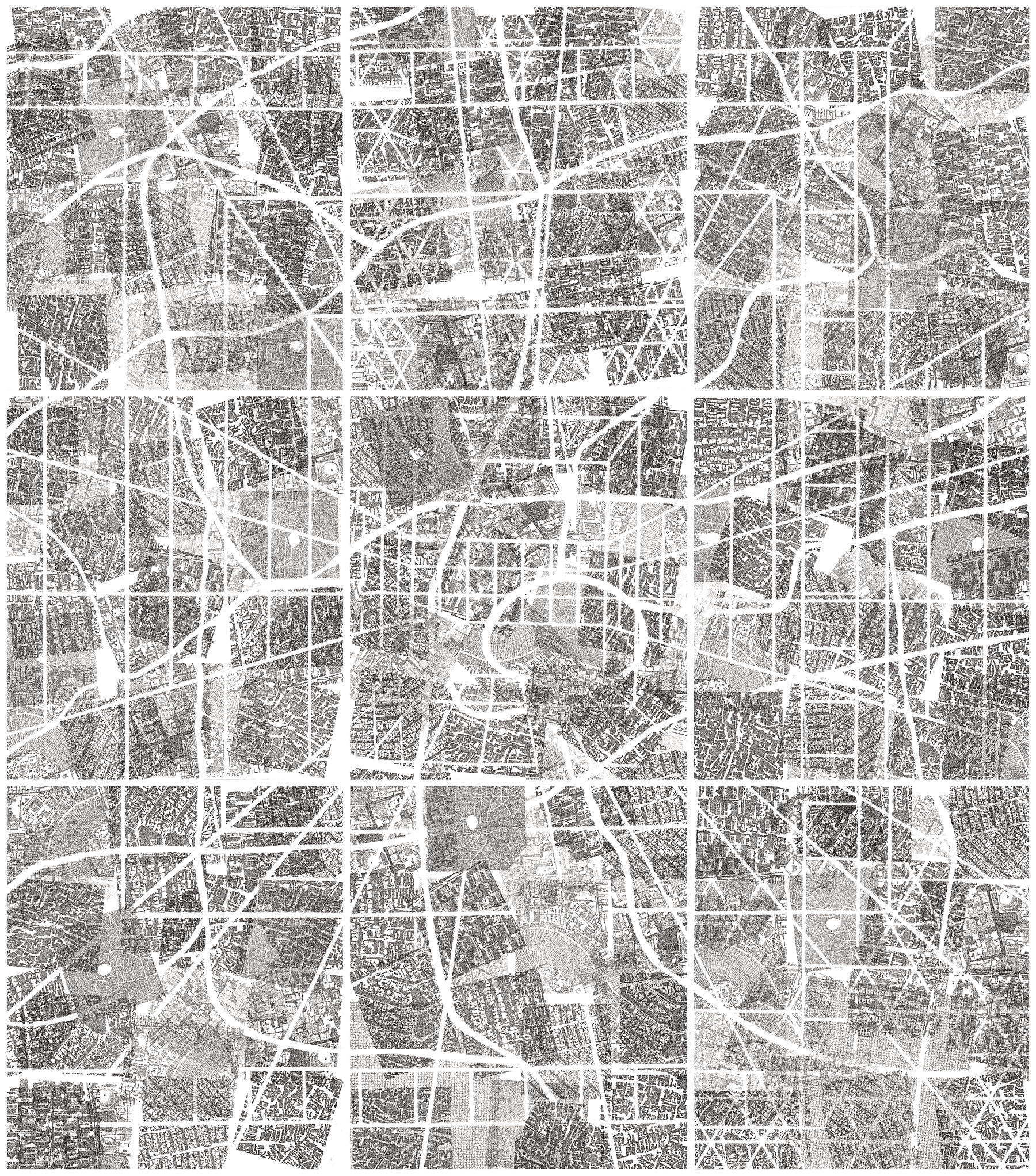
This work is based on the map of the city of Aleppo.
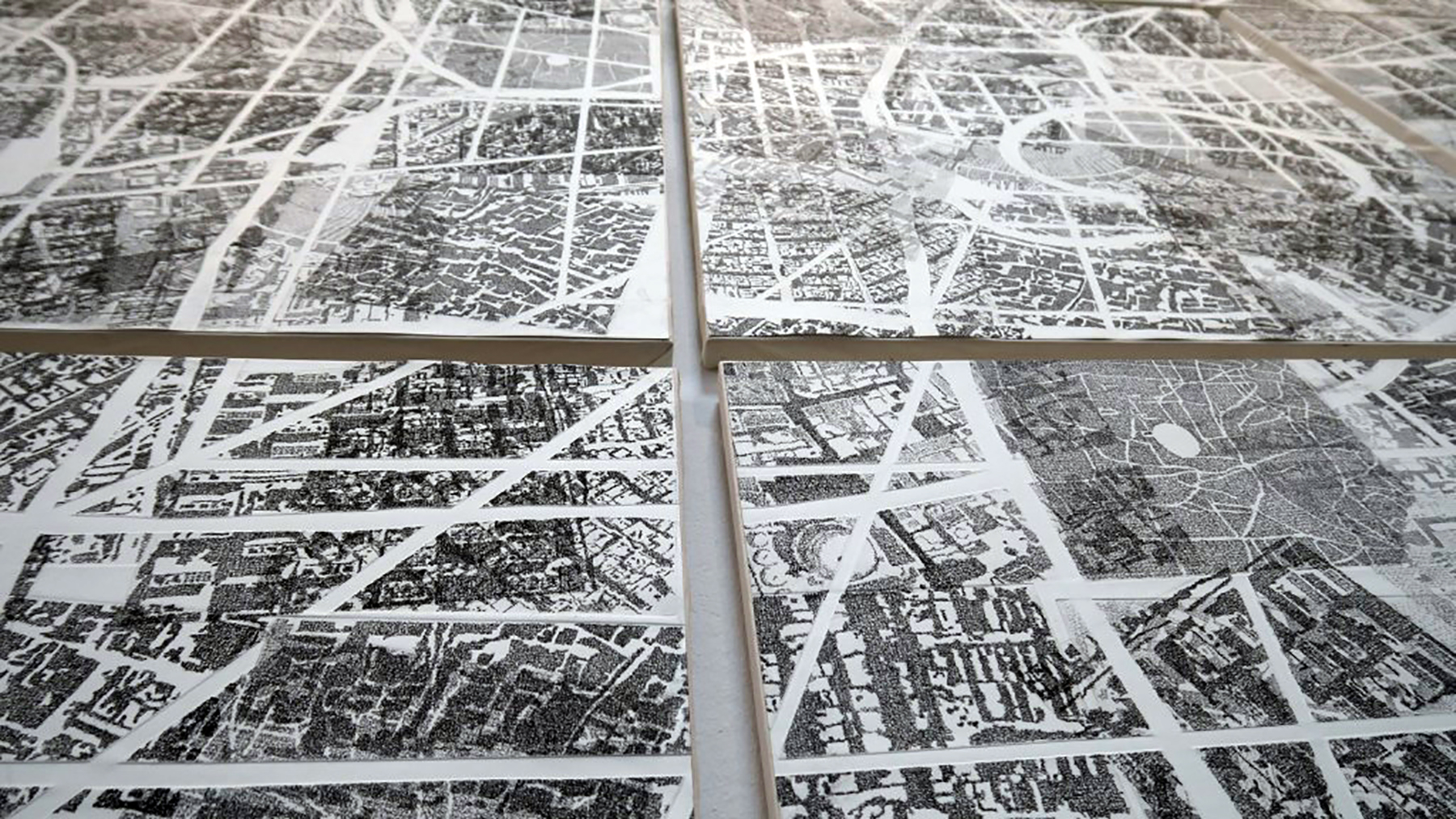
I created the engravings from fragments of the city map, layering and crossing them repeatedly to create different gradations of black. The map becomes more than a representation of a place: it becomes a record of memory, history, and loss.
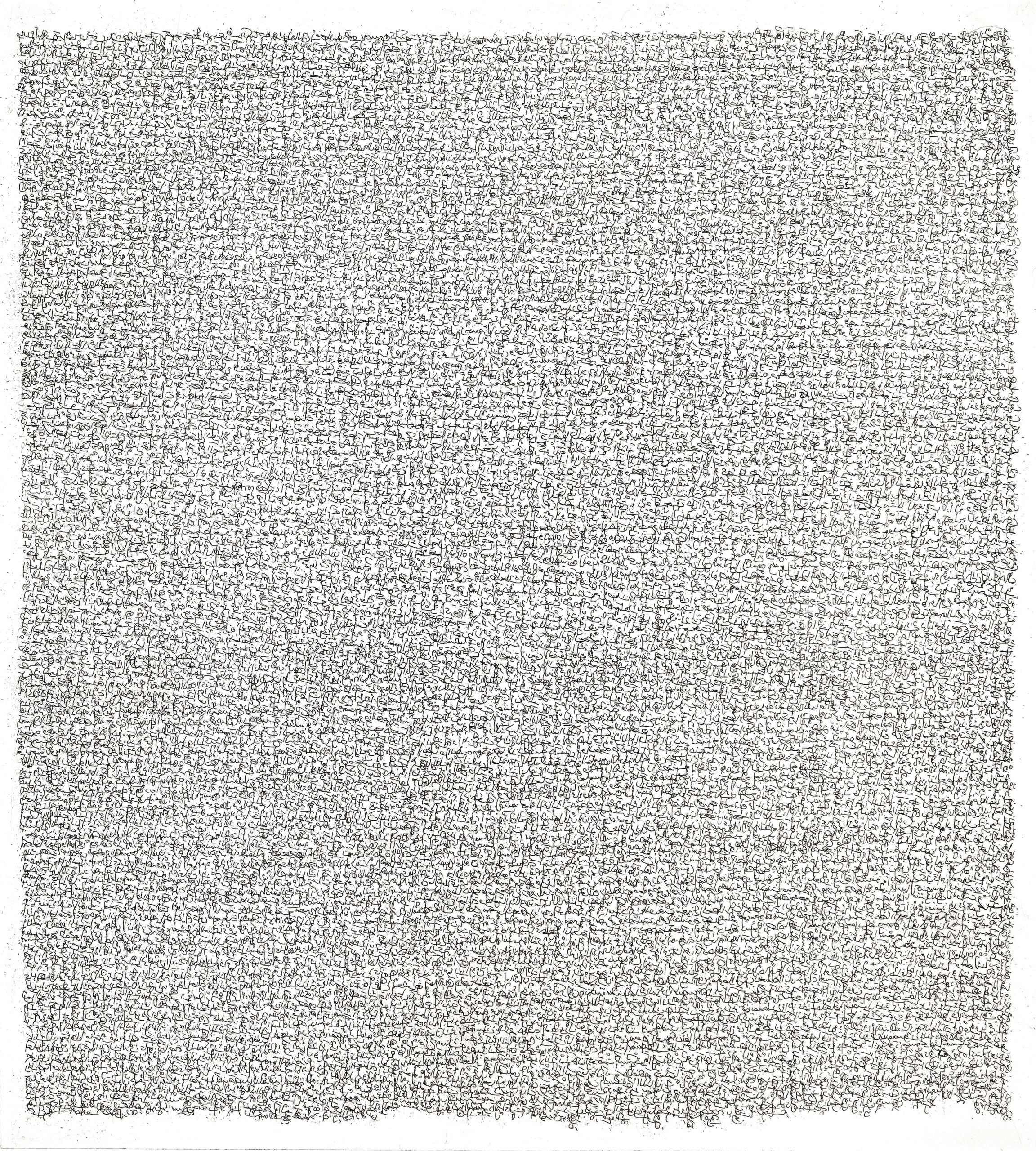
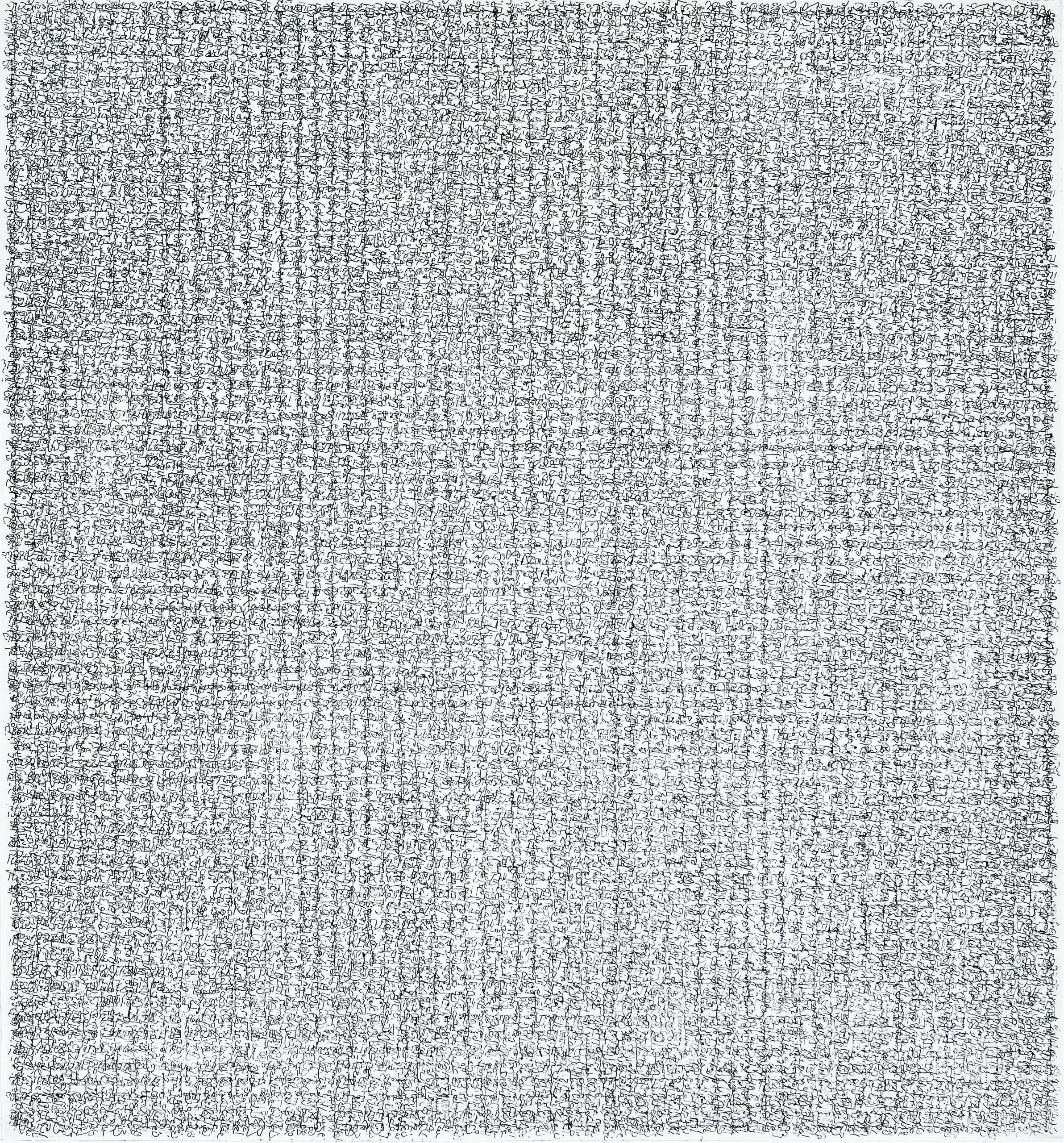
The words I use are not only reflections on the present war, but also thoughts and memories inspired by it, including the names of people—some known to me, others unknown—who have disappeared in different circumstances. Their names are connected to particular places, and these places form part of our collective history.
Arabic is surrounded by a kind of sacred aura, probably because of its deep relationship with religious writing. Both the language and its calligraphy are governed by strict rules, In a land where so much has been destroyed and uncertainty has become part of everyday life, these rules can appear as one of the few remaining certainties.
For me, however, language can move beyond its prescribed meaning. It becomes thought itself rather than simply a tool for expressing thought. I try to use calligraphy as an instrument freed from authority, allowing it to become something personal and open to interpretation. Through this, a new form of dialogue can emerge.
In a city as old as Aleppo, where thousands of years of different civilisations and peoples have accumulated, history exists in layers. These layers overlap and intersect, creating a complex map of buildings, streets, writings, memories, and human lives.
When sudden destruction and chaos enter this landscape, the map changes. Its layers collapse into one dense surface where time, places, and people are compressed together, as if falling into a black hole. This is what I experienced through the destruction of Aleppo: the repeated bombing of civilian neighbourhoods, the collapse of buildings, and the disappearance of places and people.
The superimposed layers in my work suggest these explosions and their aftermath. Traces of perspective remain barely visible between the different layers. From the accumulation of old and new maps, other, almost virtual maps emerge—new roads, new places, and new identities.
The city changes its appearance, and its identity is transformed. Faced with these changes, I ask myself: Will I become a foreigner when I return?
Aleppo is more than five thousand years old and is one of the oldest continuously inhabited cities in the world. Its destruction is therefore not the end of its story. The city has been destroyed and rebuilt many times throughout the centuries. It has always survived and found ways to be reborn.
Its scars remain not only in its stones and streets, but also in the memories and souls of its inhabitants.
Mouna Ikhlassy