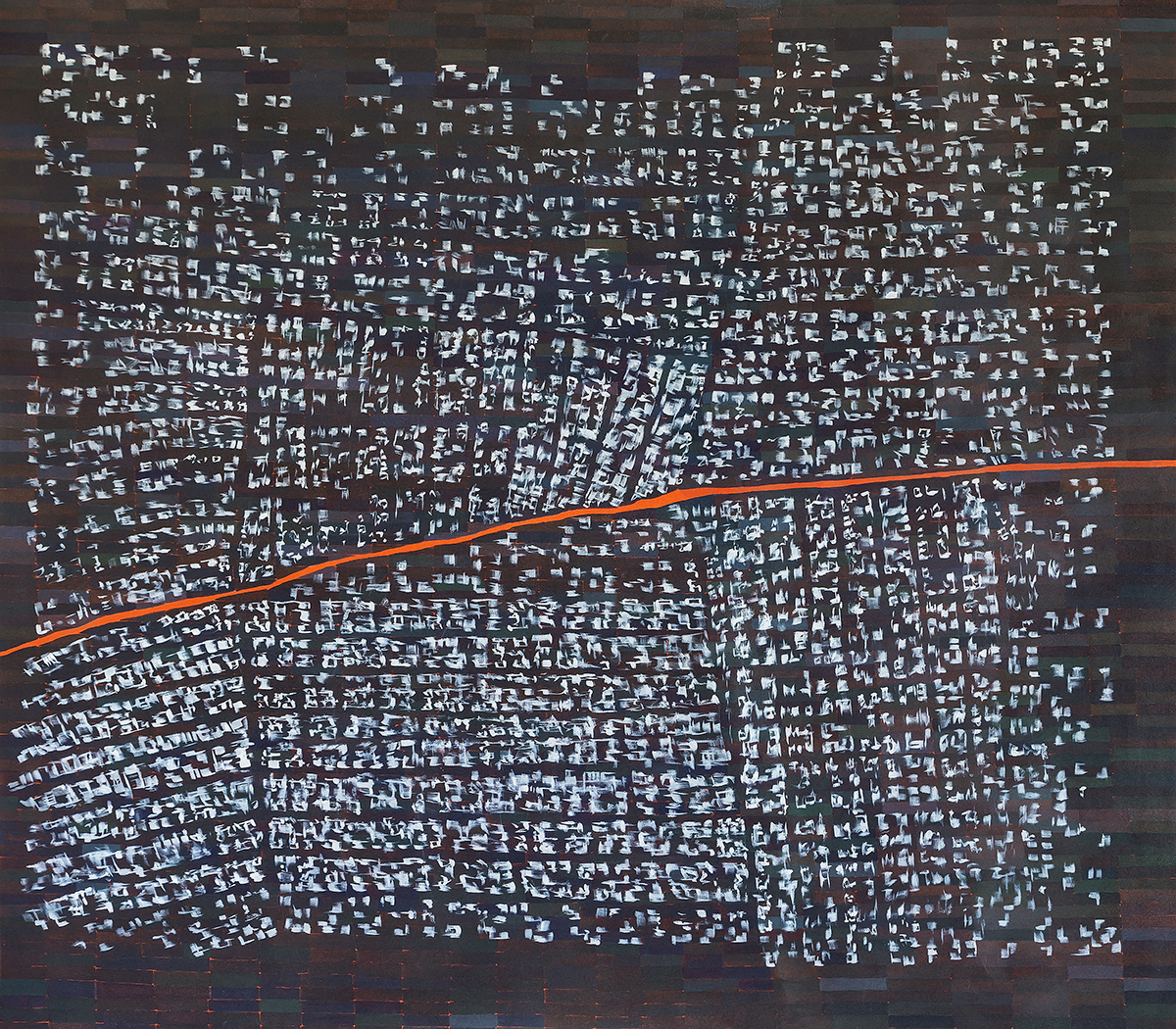
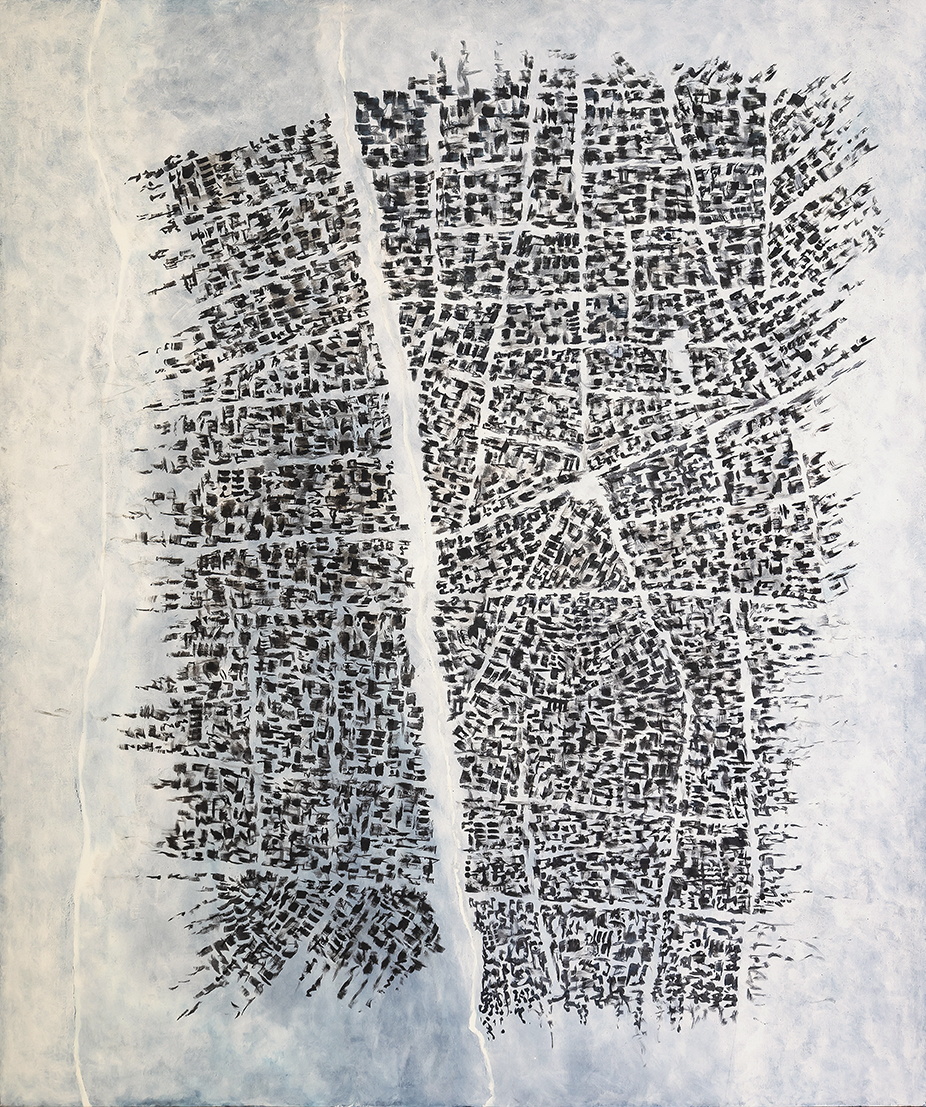
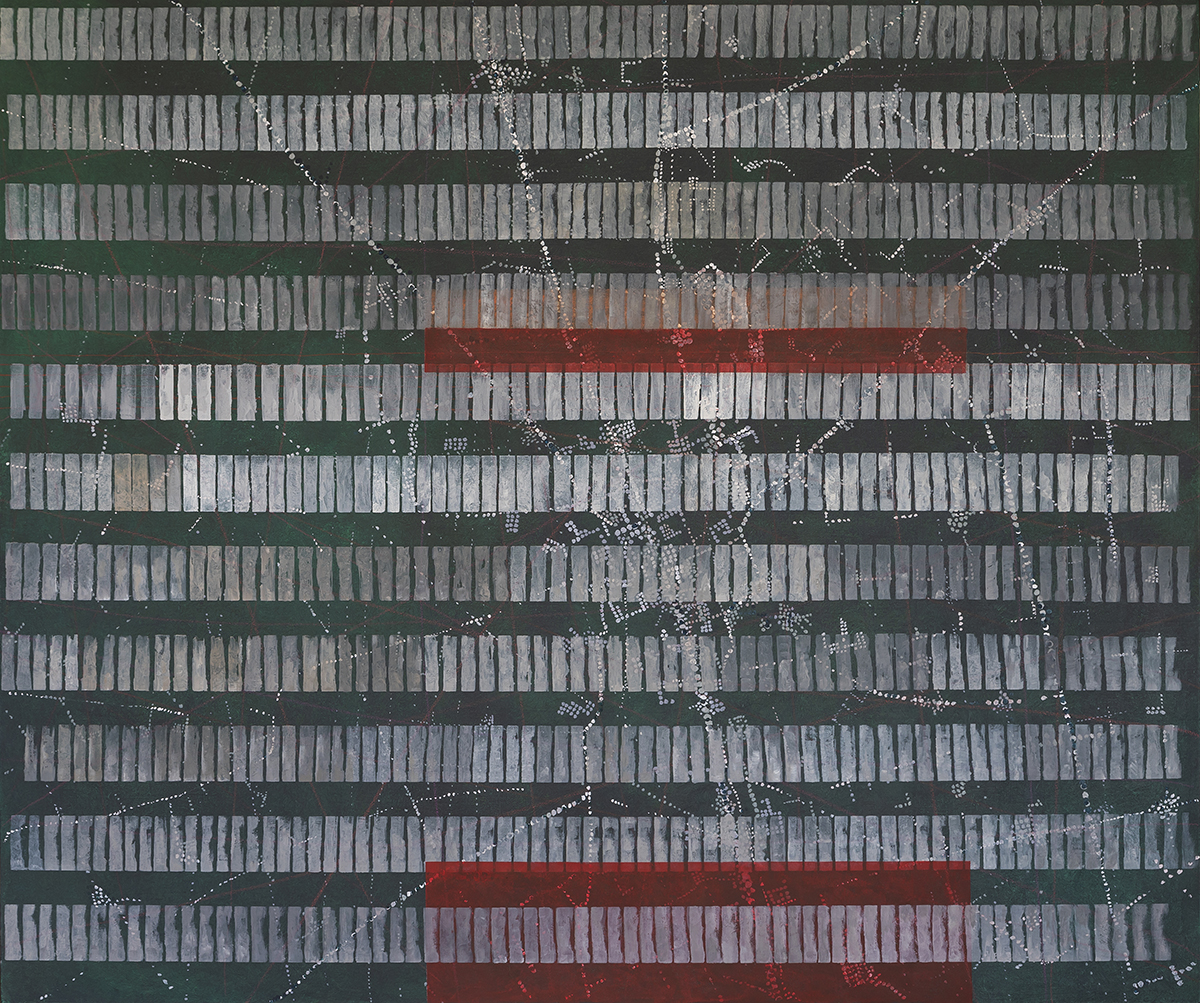
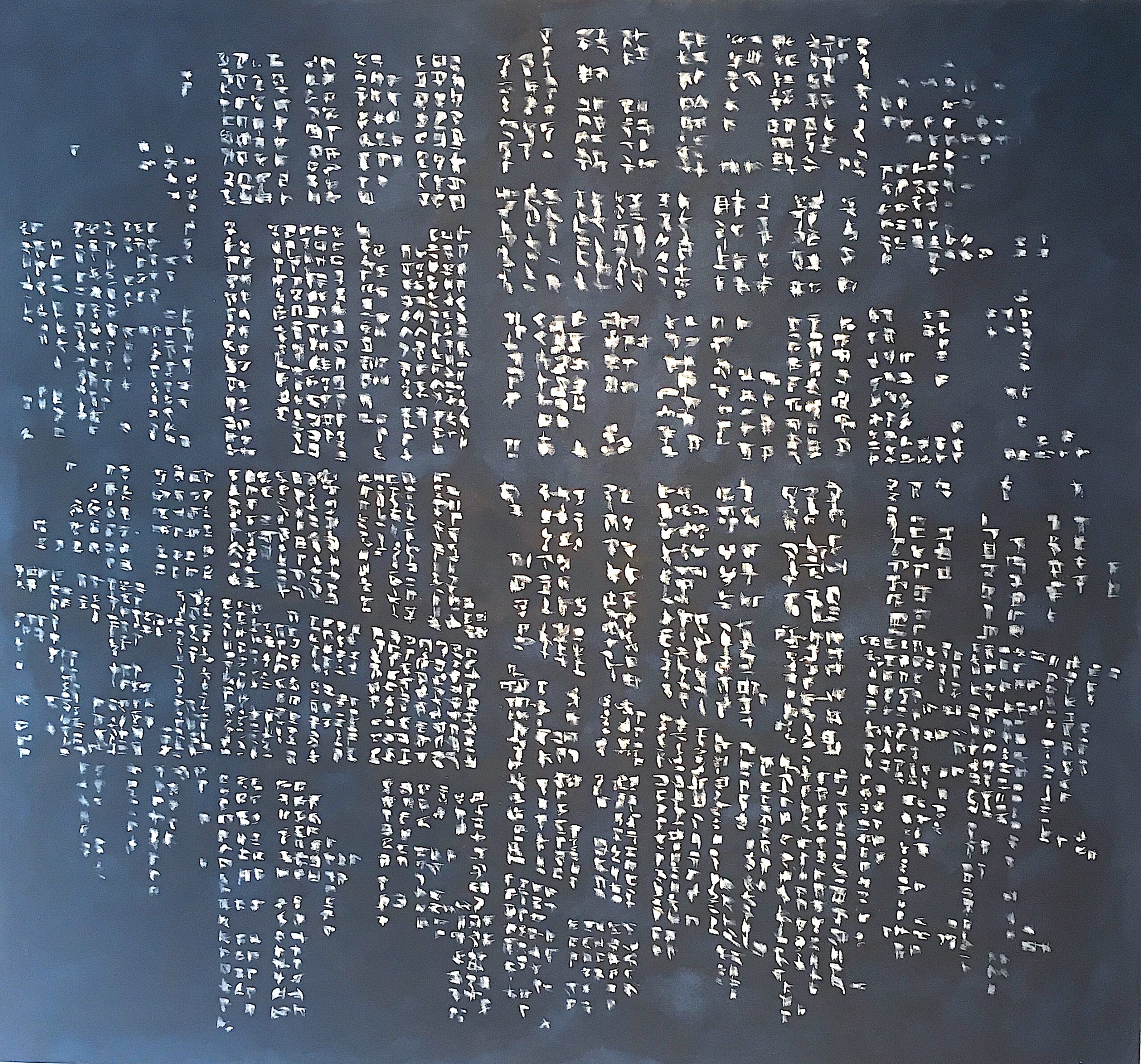
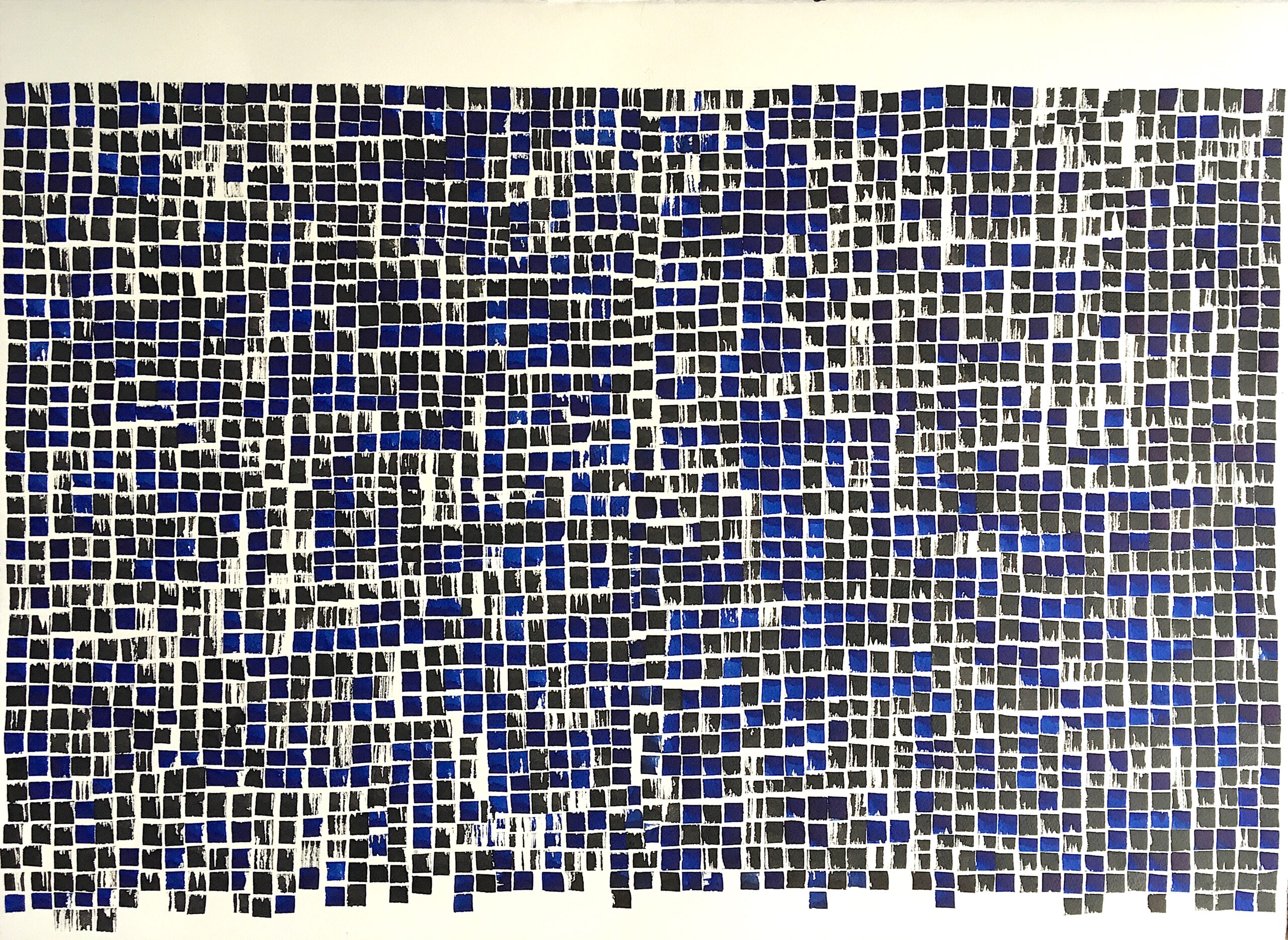
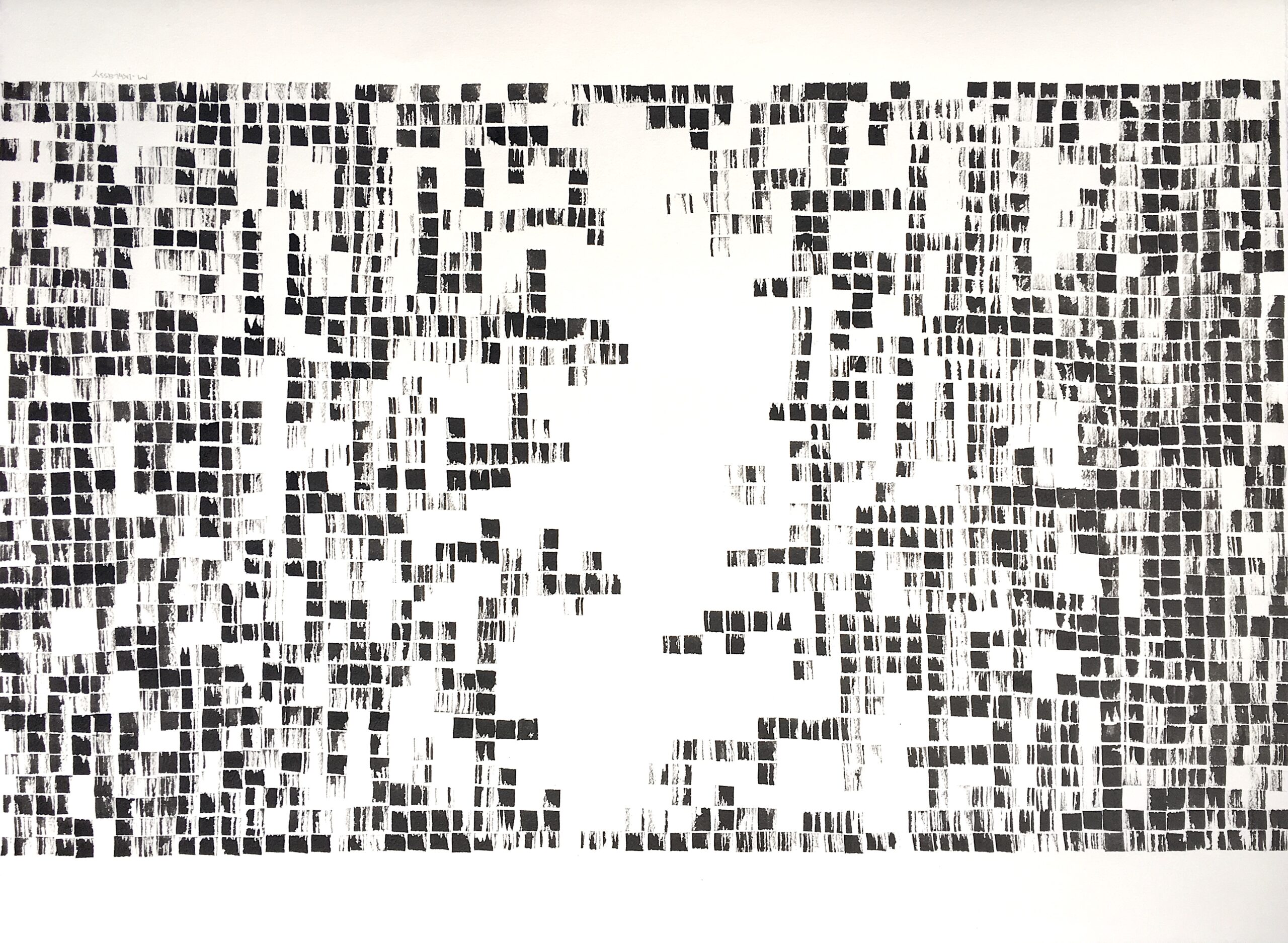
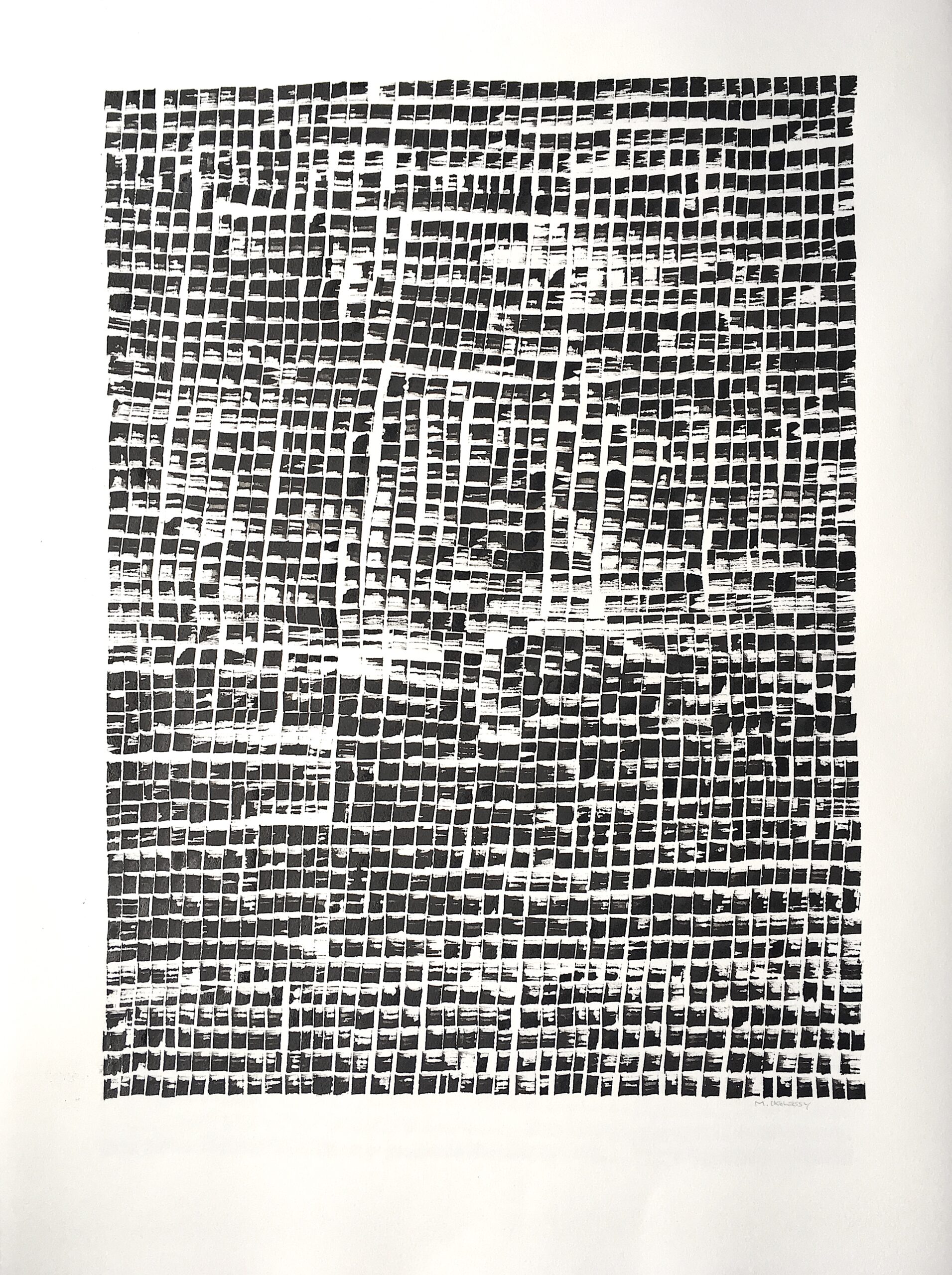
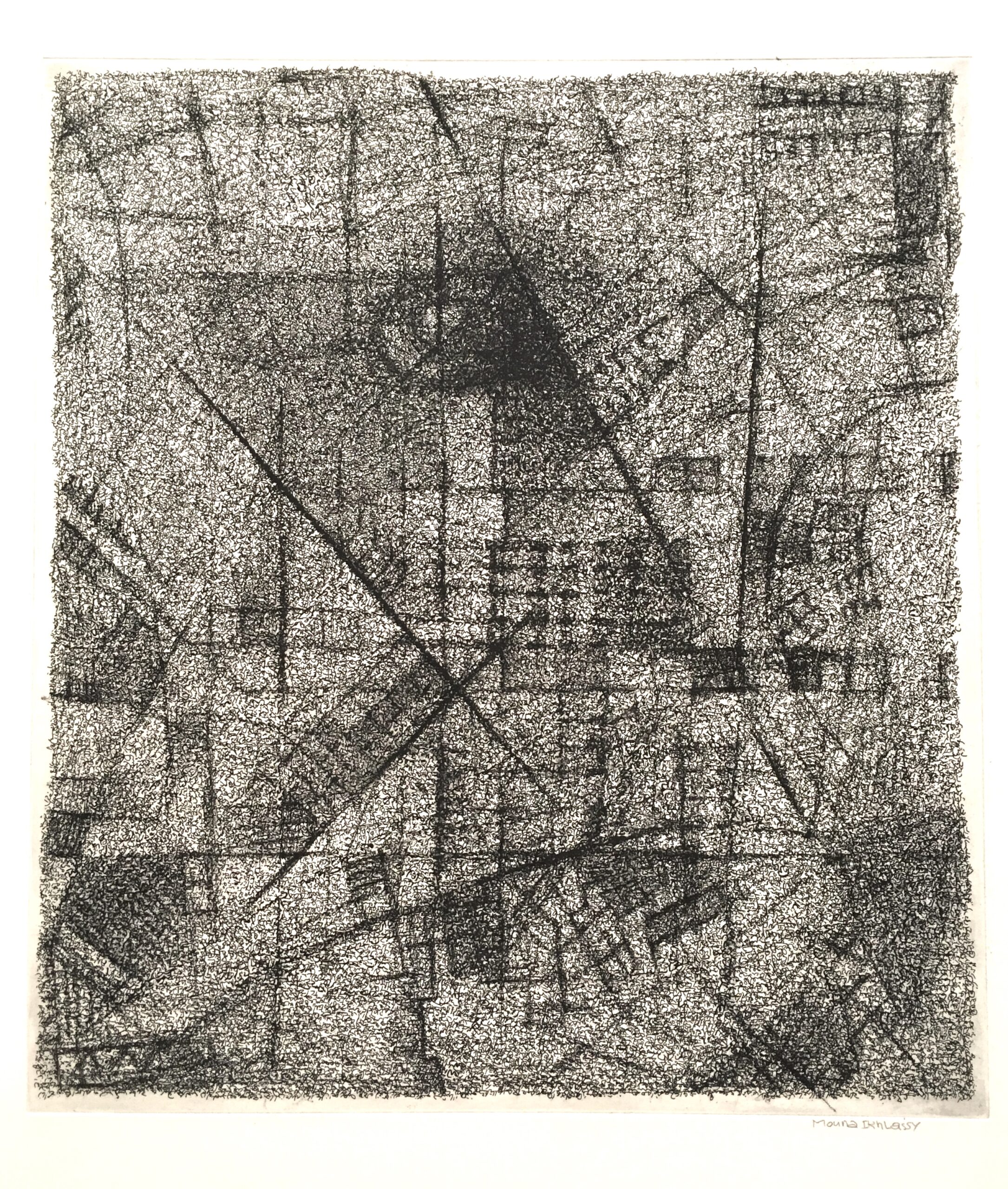
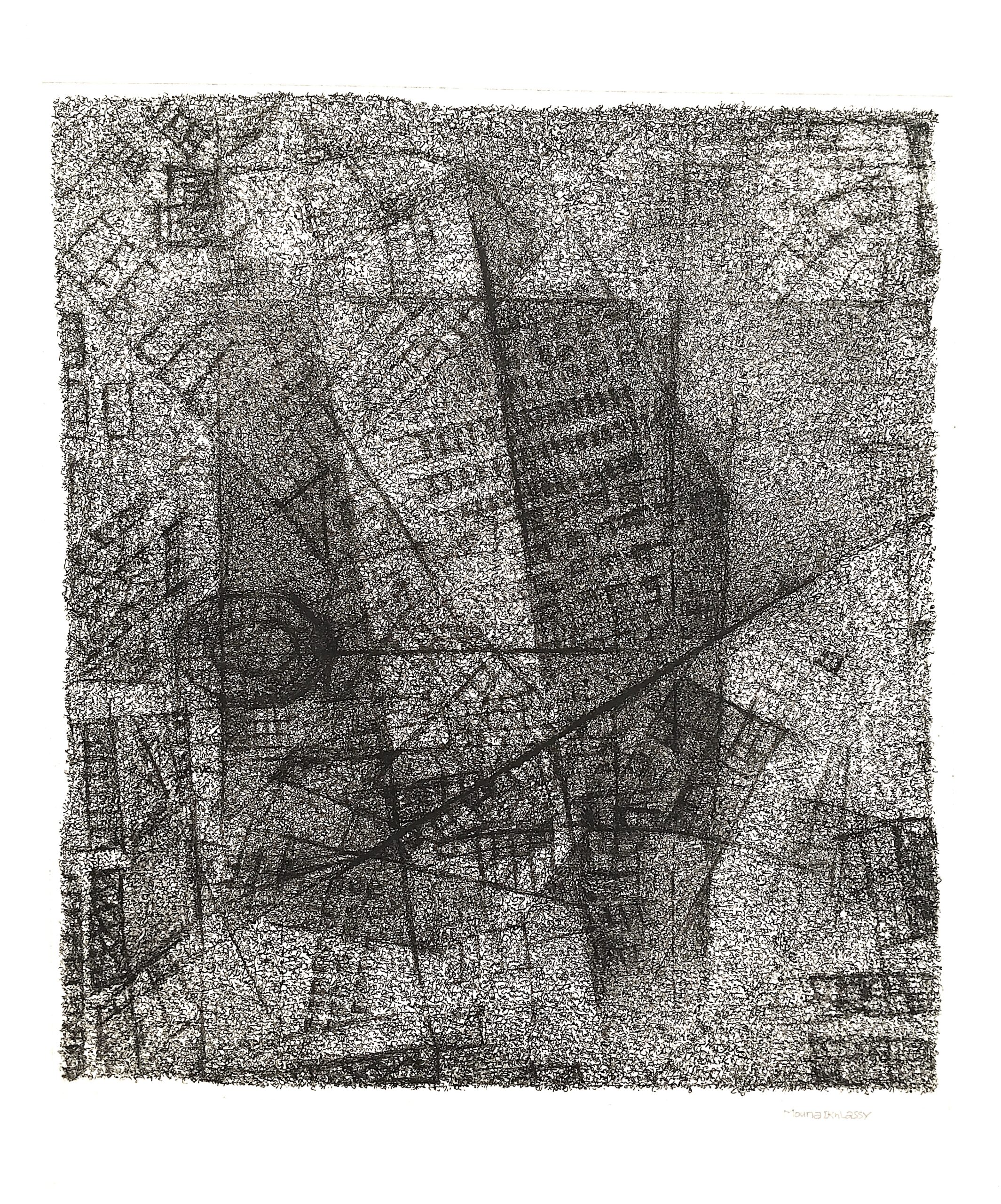
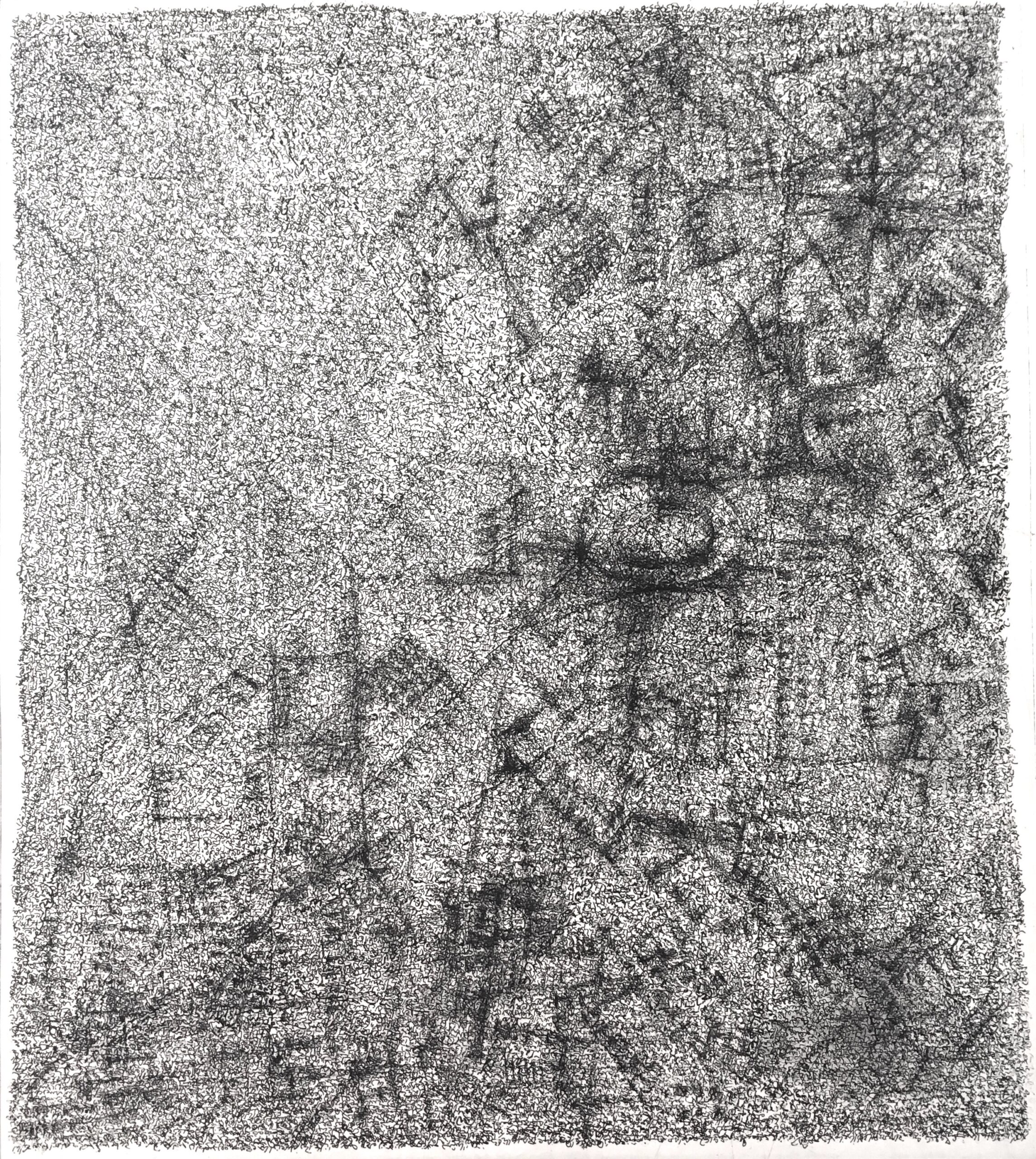
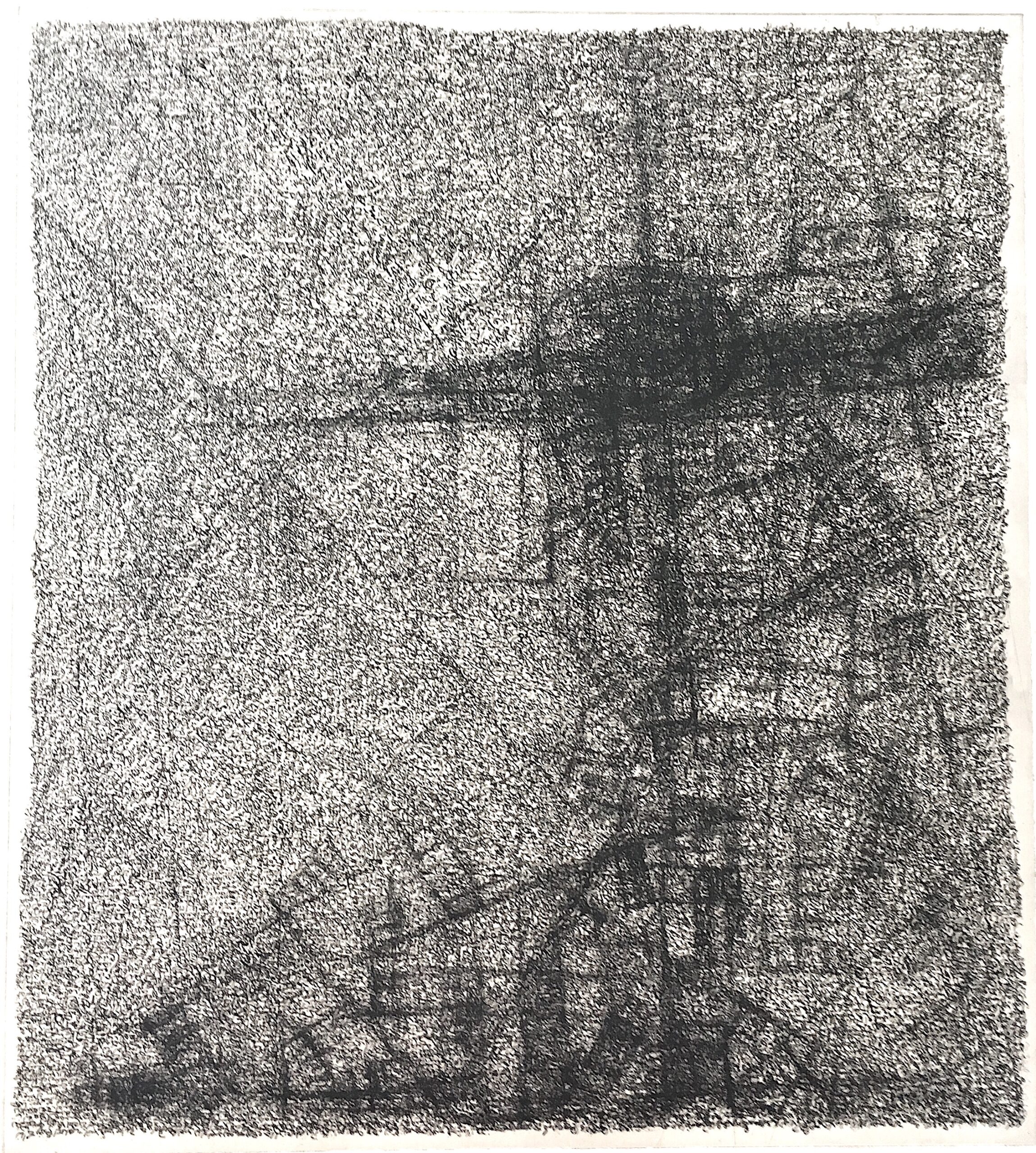
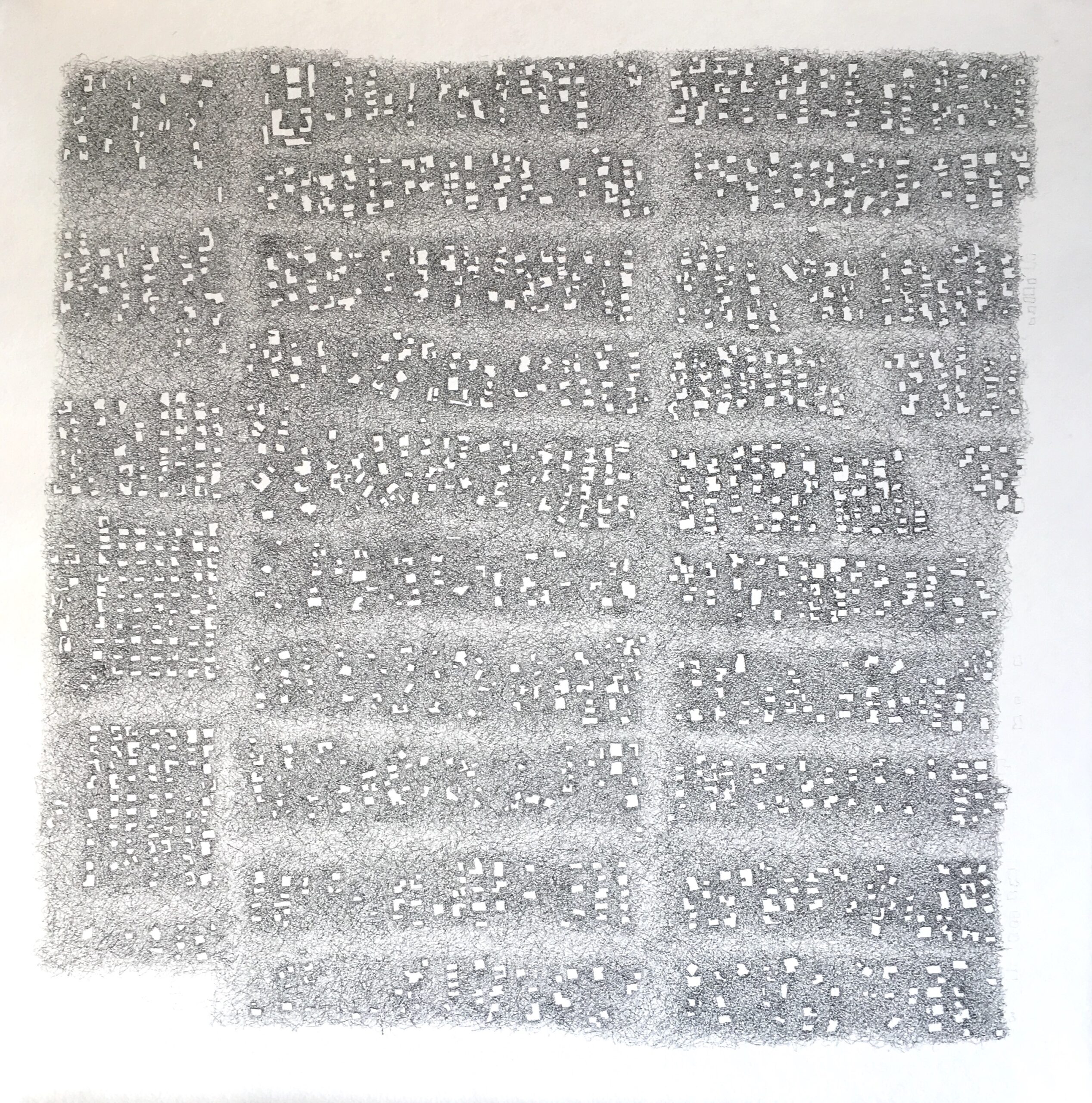
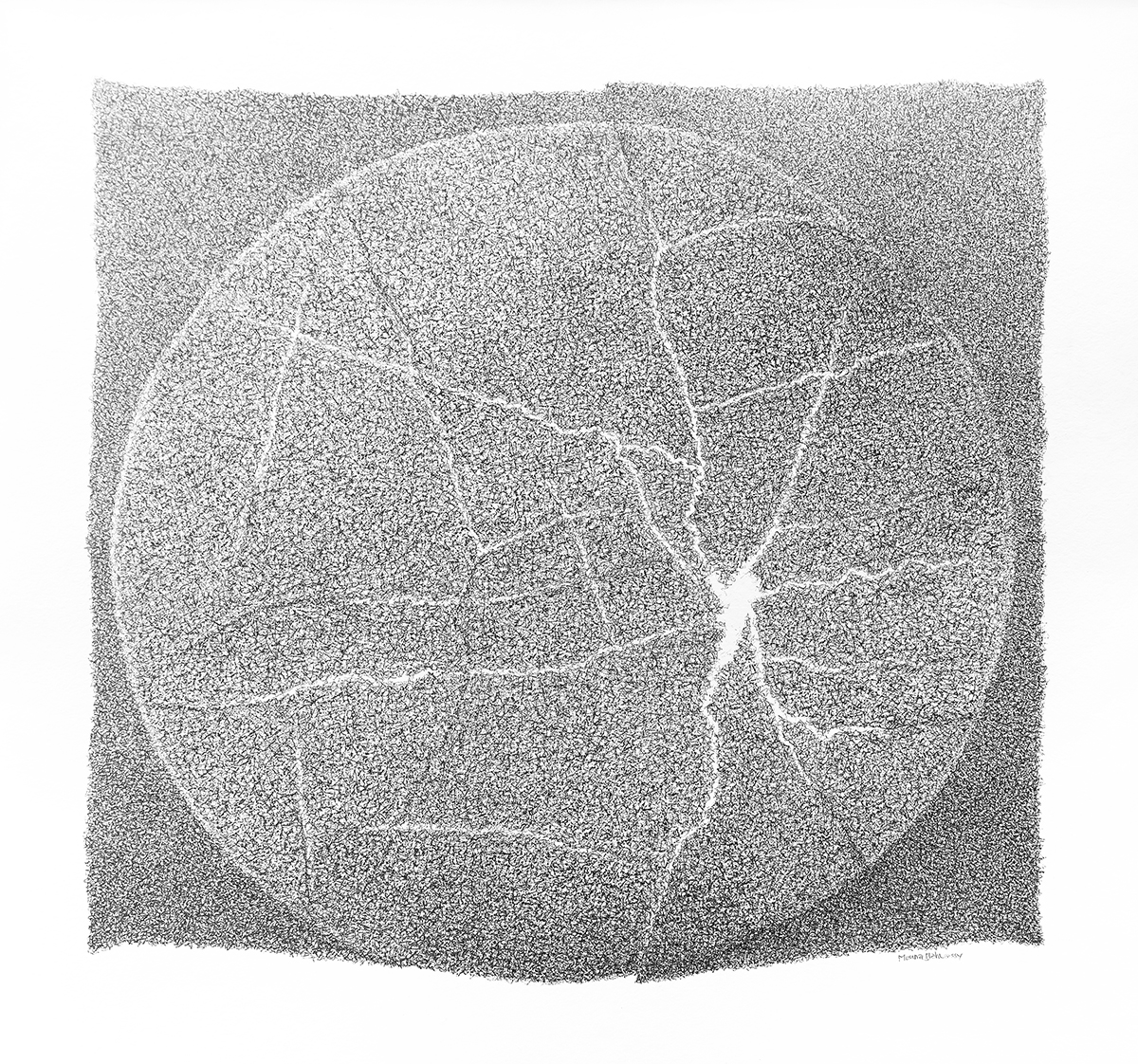
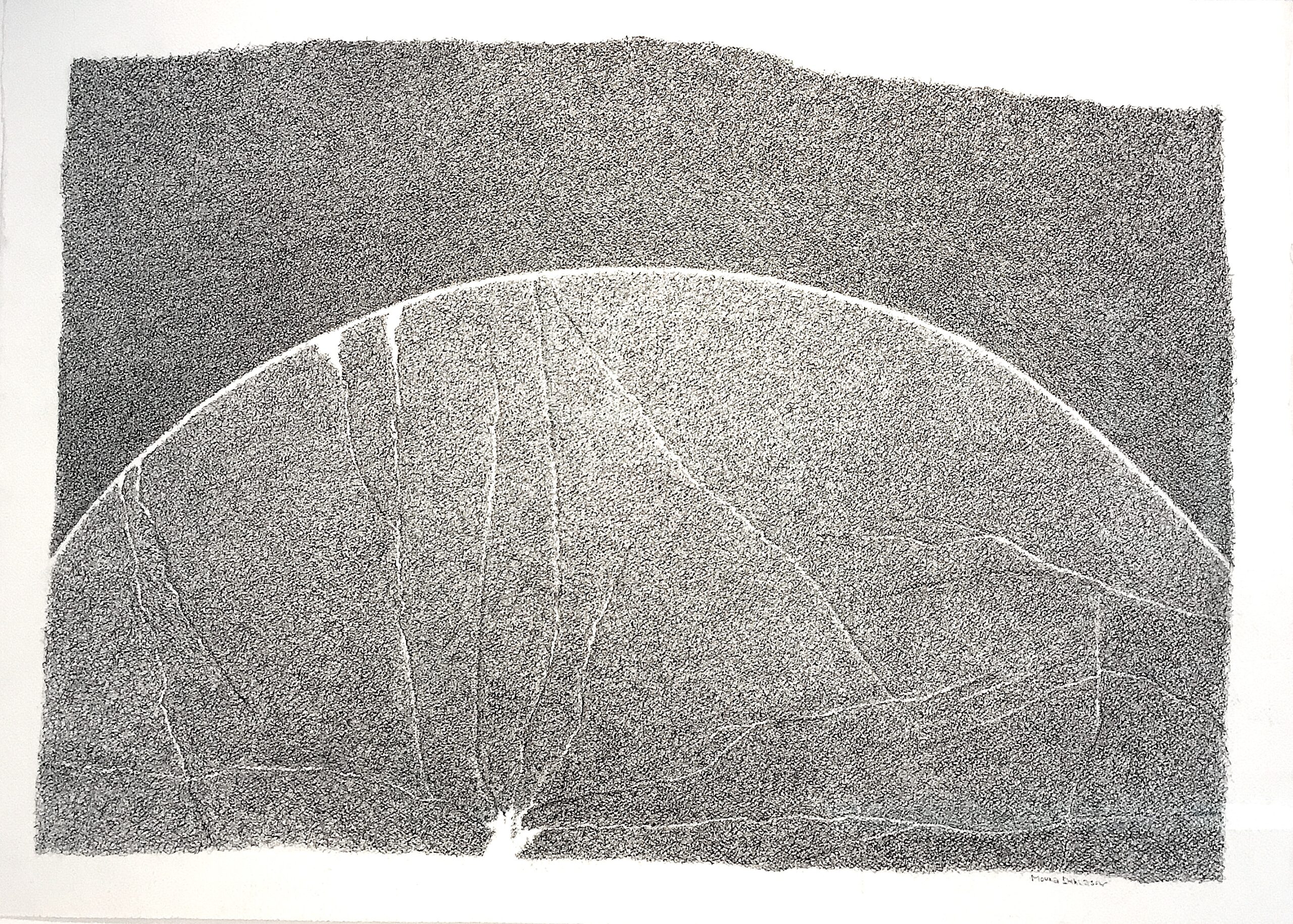
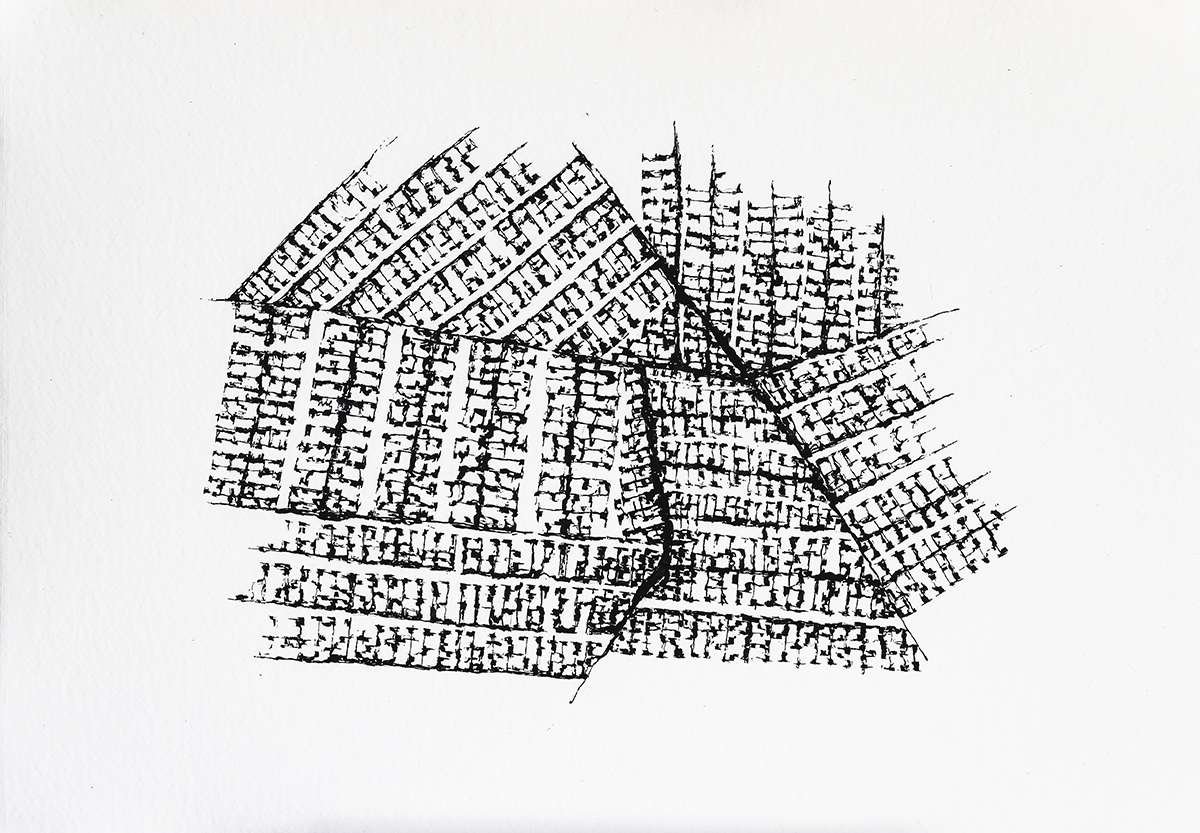
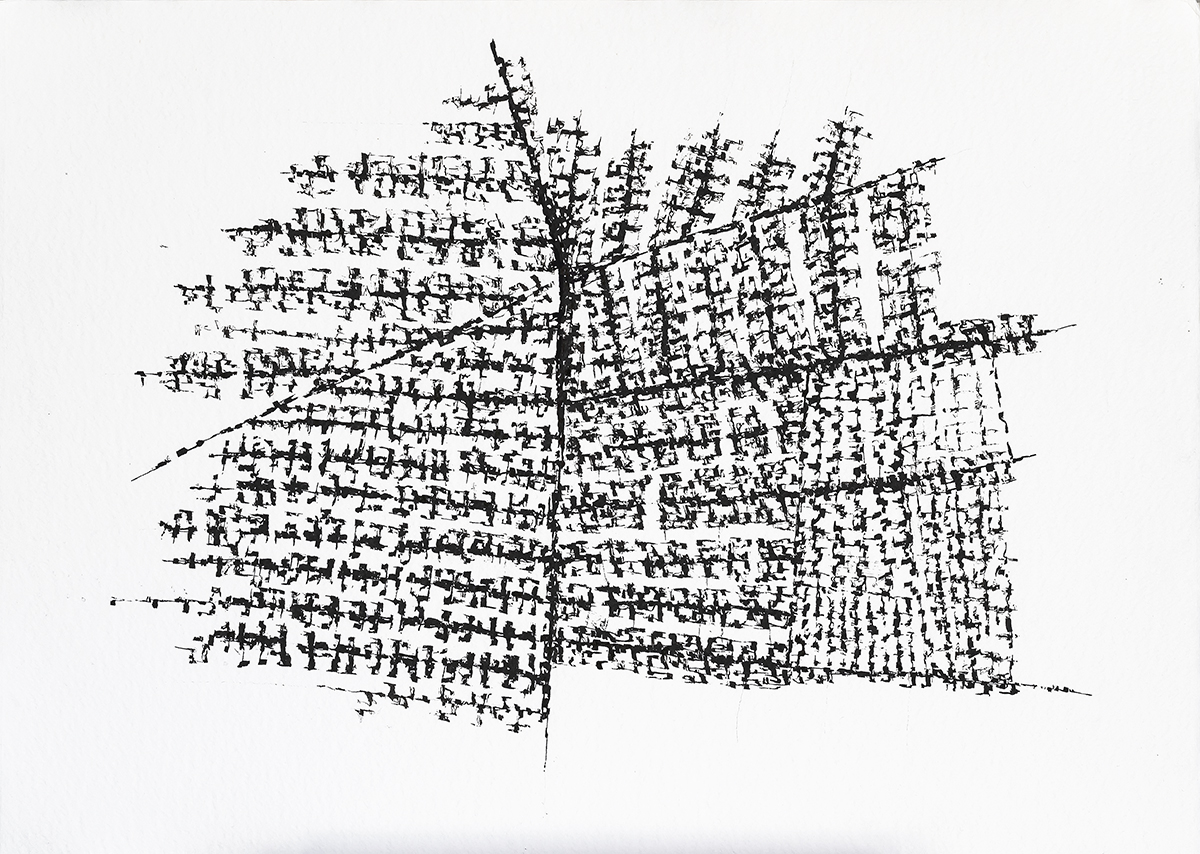
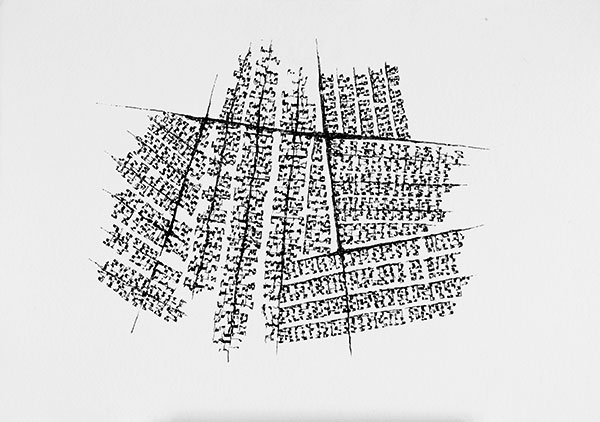
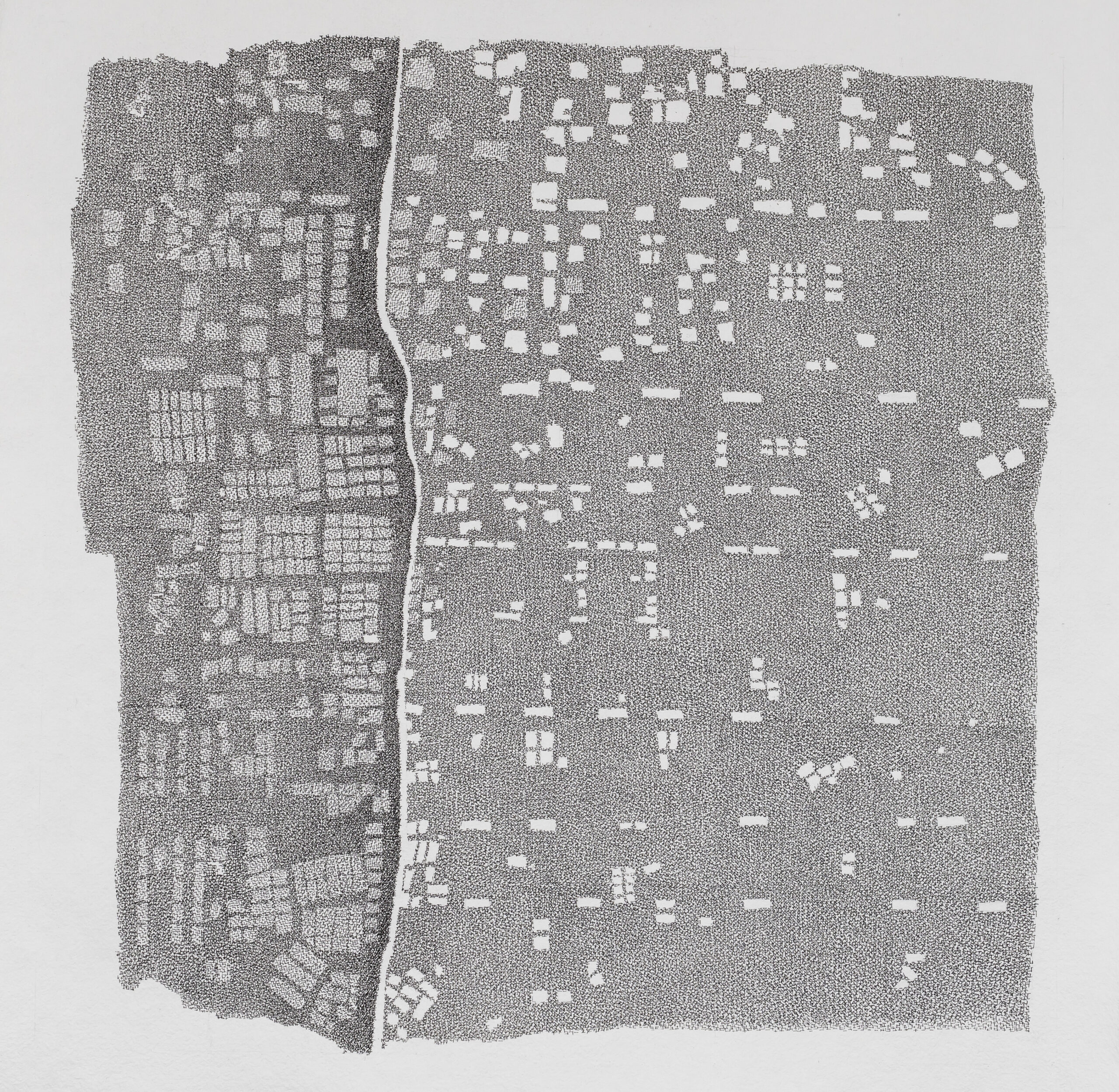
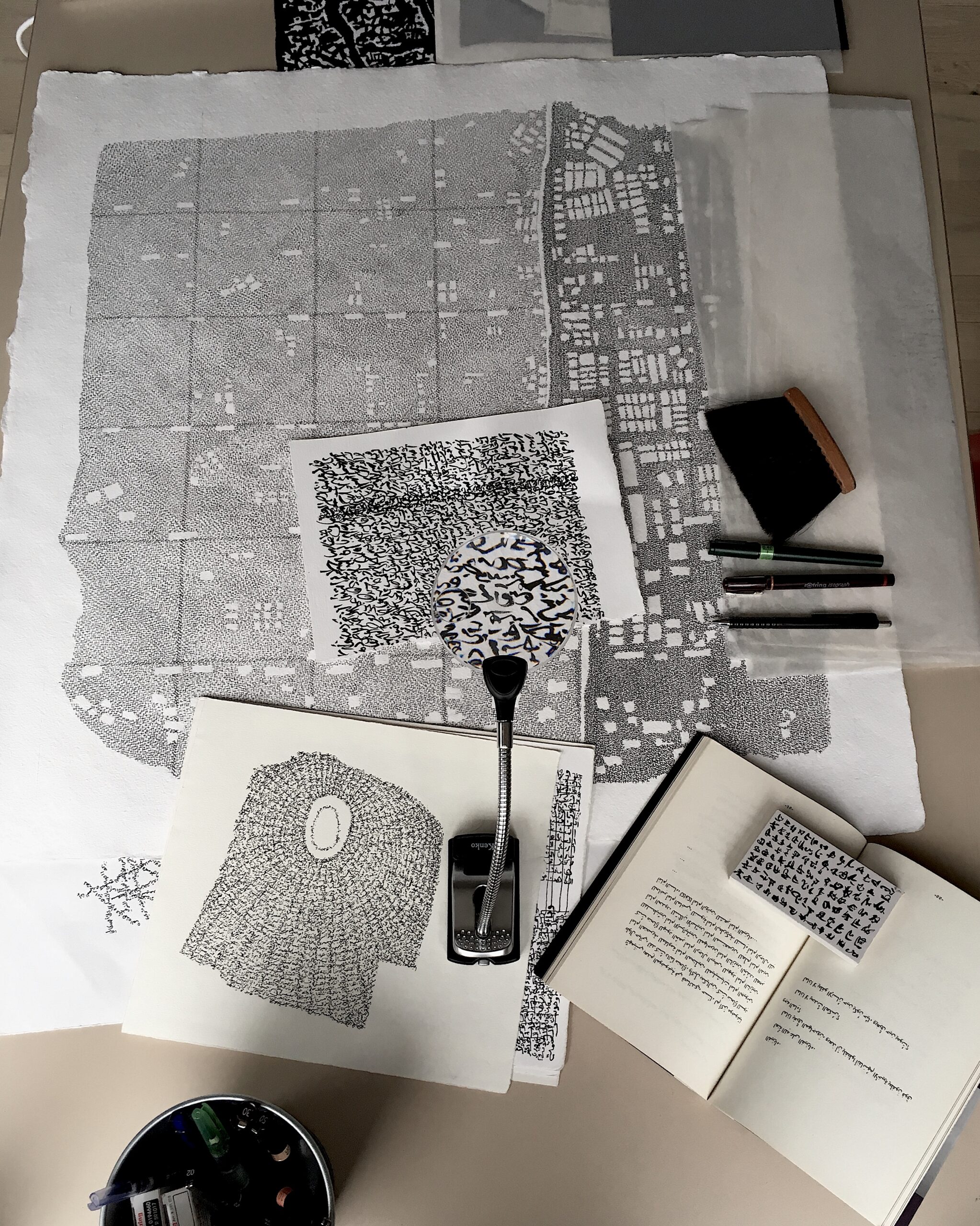
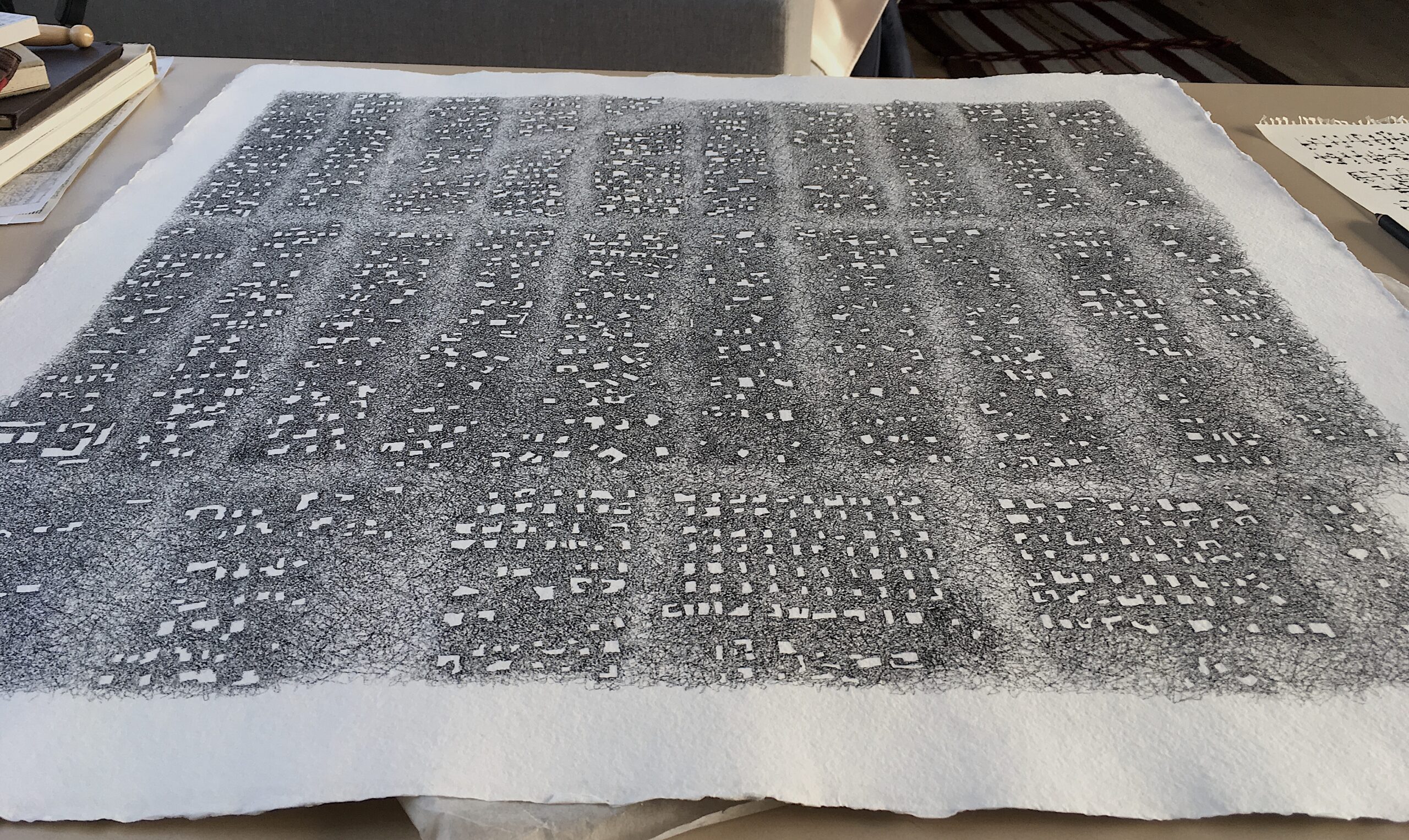
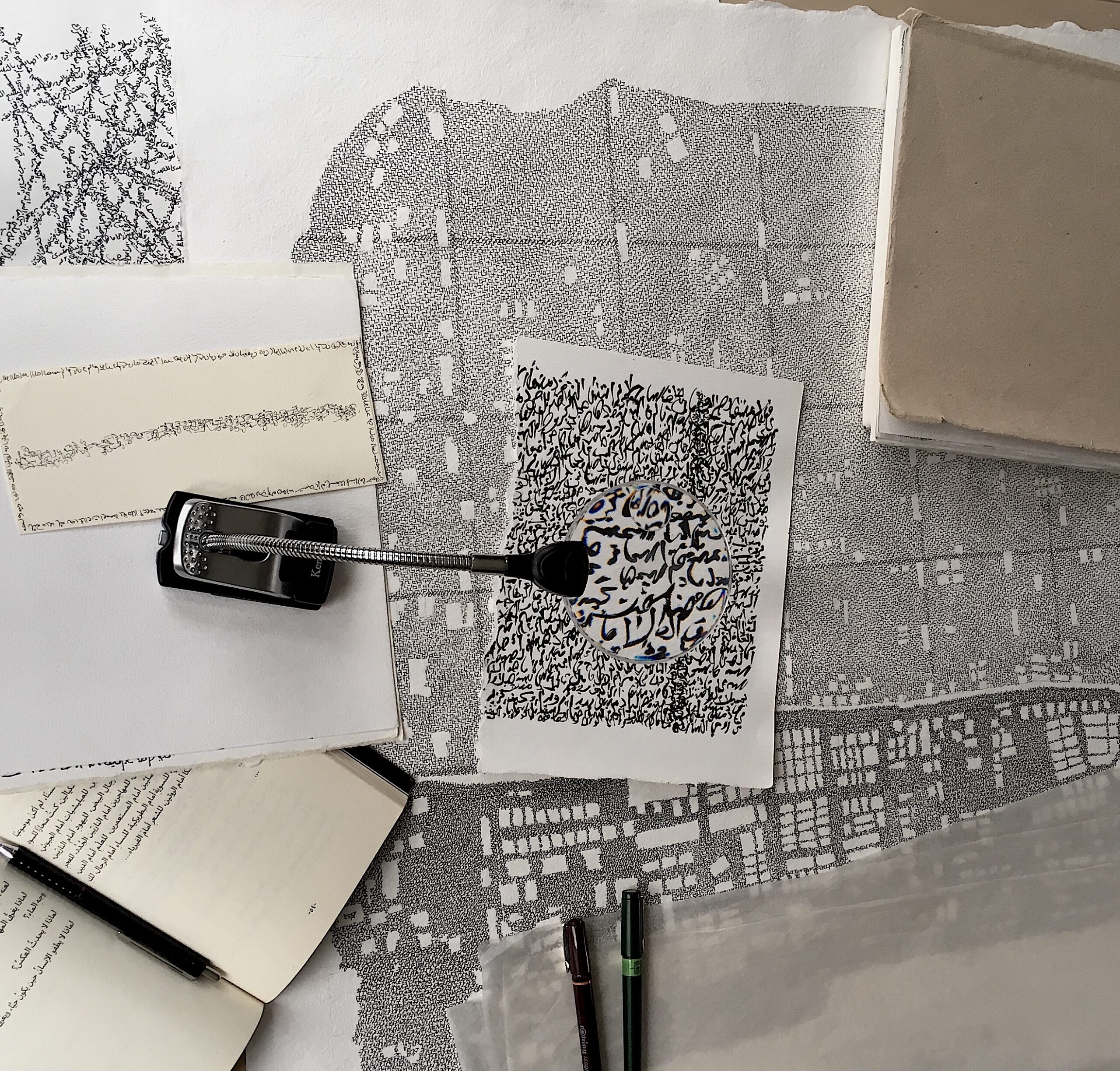
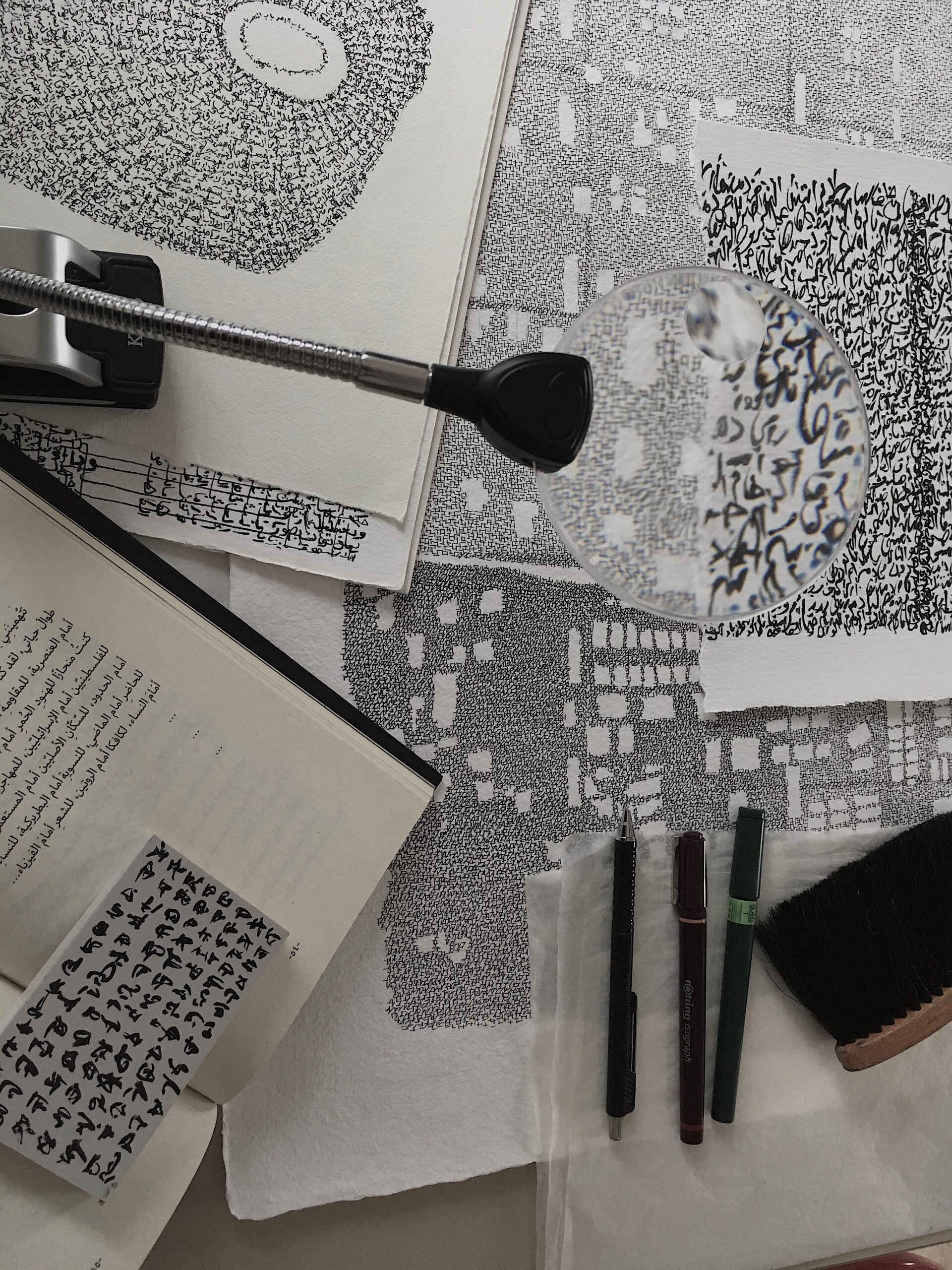
With one exception, all the works in this series are connected to geographical maps. They point toward a “there,” a distant place that continues to haunt me.
Most of the works show aerial views of the refugee camps of Zaatari and Rukban, and others where tens of thousands of refugees have lived.
By drawing these maps, I create a certain distance from the reality of war and exile. I wanted to approach them through maps.
For me, however, these maps are not only images of places. They also show how exile is organised. The straight, parallel and perpendicular lines create grids that resemble the way refugee camps are planned and controlled. Maps are part of this process: they are used to plan the camps, organise their spaces, and manage everyday life.
But the order of these grids is never complete. Under and between the straight lines, there is always something that escapes. The texture of the charcoal, cracks, gaps and irregular edges bring back a sense of movement and disorder. Life does not remain inside the limits imposed by the grid. Order and disorder, control and resistance, exist together in the works.
The work is also about time. Refugee camps are usually considered temporary places, but in reality they can remain for many years. They make exile last and create a permanent state of waiting. For the people who live there, memories of the places they left behind and the hope of returning remain very strong.
This idea of time is also connected to my own experience. I worked with engraved maps of Aleppo, my hometown. I was trying to hold on to the streets and places I had known all my life. Six years later, I began drawing refugee camps instead.
The change from engraving to charcoal is also important to me. When I engraved Aleppo, the lines were permanent. Engraving allowed me to preserve the memory of a place that I had lost. I was trying to keep its streets and its history alive.
Charcoal is different. It sits on the surface of the paper and can easily be erased or disappear. It is made of carbon and reminds me of the dust and sand of the desert where the camps are located. It is fragile, temporary and connected to disappearance.
This makes charcoal particularly appropriate for drawing the refugee camps: places that were supposed to be temporary, places that perhaps should disappear, but which continue to exist year after year.
On a map, a wall is only a line. Here, it becomes a real object with depth and weight. This work changes the way I look at space. Instead of seeing a place from above and from a distance, I look at it from close by, from the position of the body.
Perhaps this work marks the beginning of another transition in my relationship with space, memory and time.
Mouna Ikhlassy